Life-Science District
A former retail hub reimagined as an open, collaborative life sciences district.
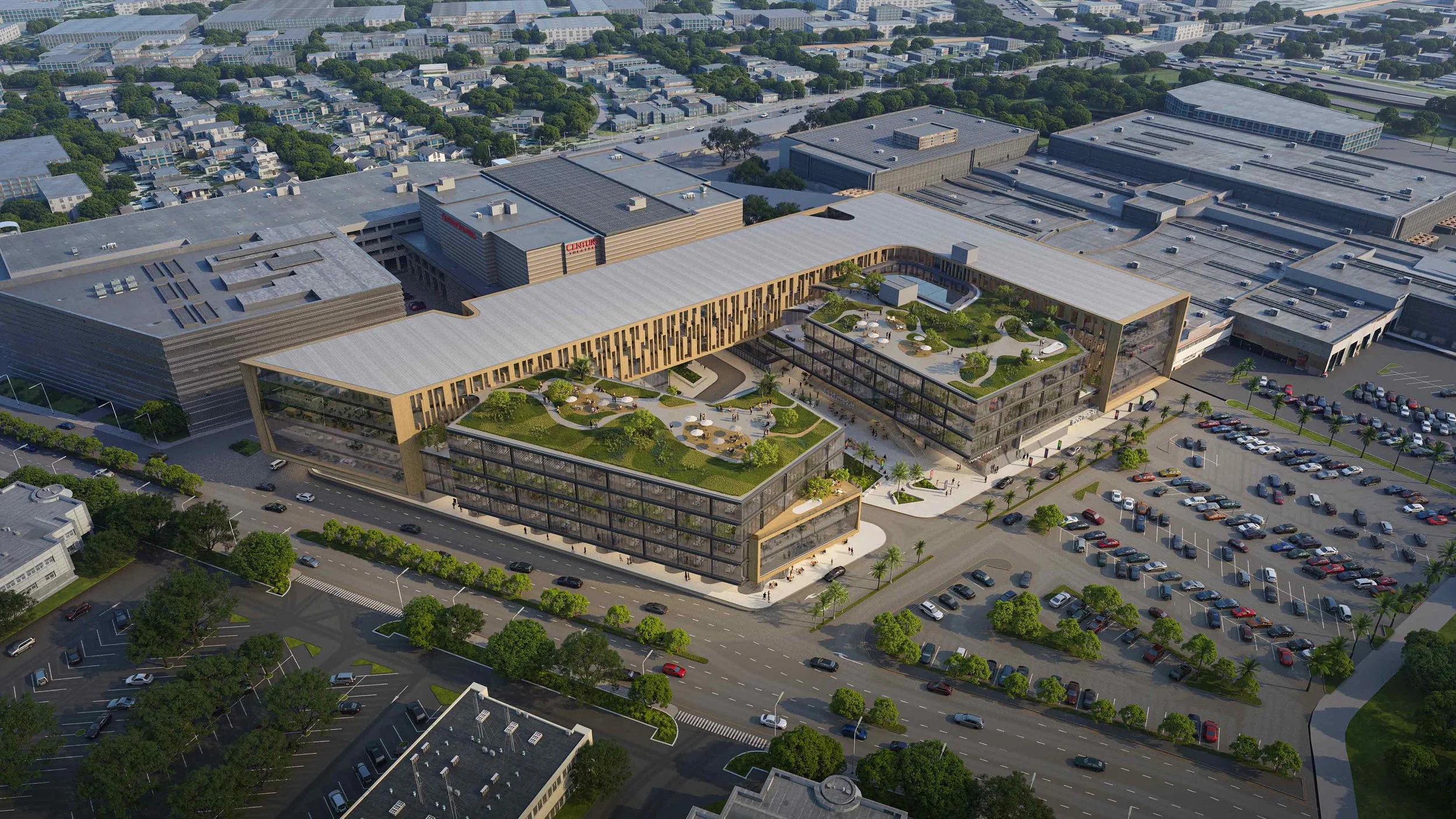
Set within San Bruno’s evolving Tanforan district, this project transforms a former retail mall and the disused Sears store into a vibrant life sciences campus that bridges innovation and urban life. Reimagined as an open, walkable environment, the design replaces inward-facing retail with a network of public spaces, workplaces, and amenities that foster collaboration and community. Flexible laboratory and office environments are paired with activated ground-level uses, landscaped courtyards, and generous terraces, creating a dynamic ecosystem for research, work, and everyday life. The result is a forward-looking district that redefines a legacy site as a center for discovery, connectivity, and sustainable growth.
-
Life-Science District – From Retail Enclave to Innovation Campus
Located in San Bruno within the San Francisco Bay Area, the Life-Science District transforms a former retail mall into a research-driven campus at the intersection of global connectivity and regional innovation. Positioned near San Francisco International Airport and adjacent to Silicon Valley, the project redefines the underutilised Tanforan site—once anchored by a traditional mall and Sears department store—as an open, porous, and collaborative life sciences hub.
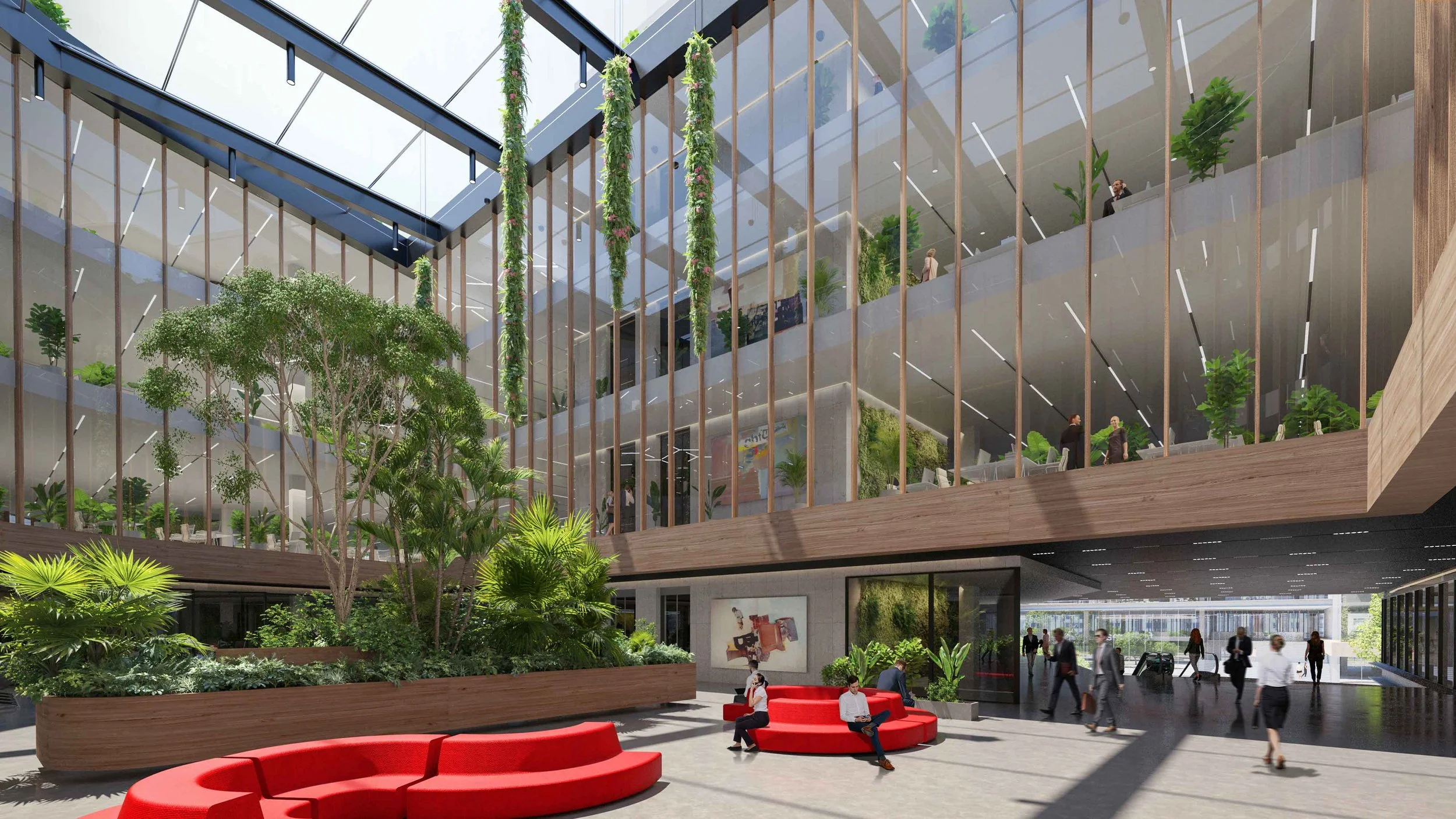
The design builds on the selective transformation of the existing retail fabric, breaking down its large-scale footprint into a network of interconnected buildings, courtyards, and pedestrian routes. This fragmentation introduces a finer urban grain that improves permeability, daylight access, and programmatic diversity. The former Sears building is repurposed as a flexible laboratory and research anchor, with its deep floor plates adapted through strategic voids and insertions that bring light into the core and establish visual connections across the campus.
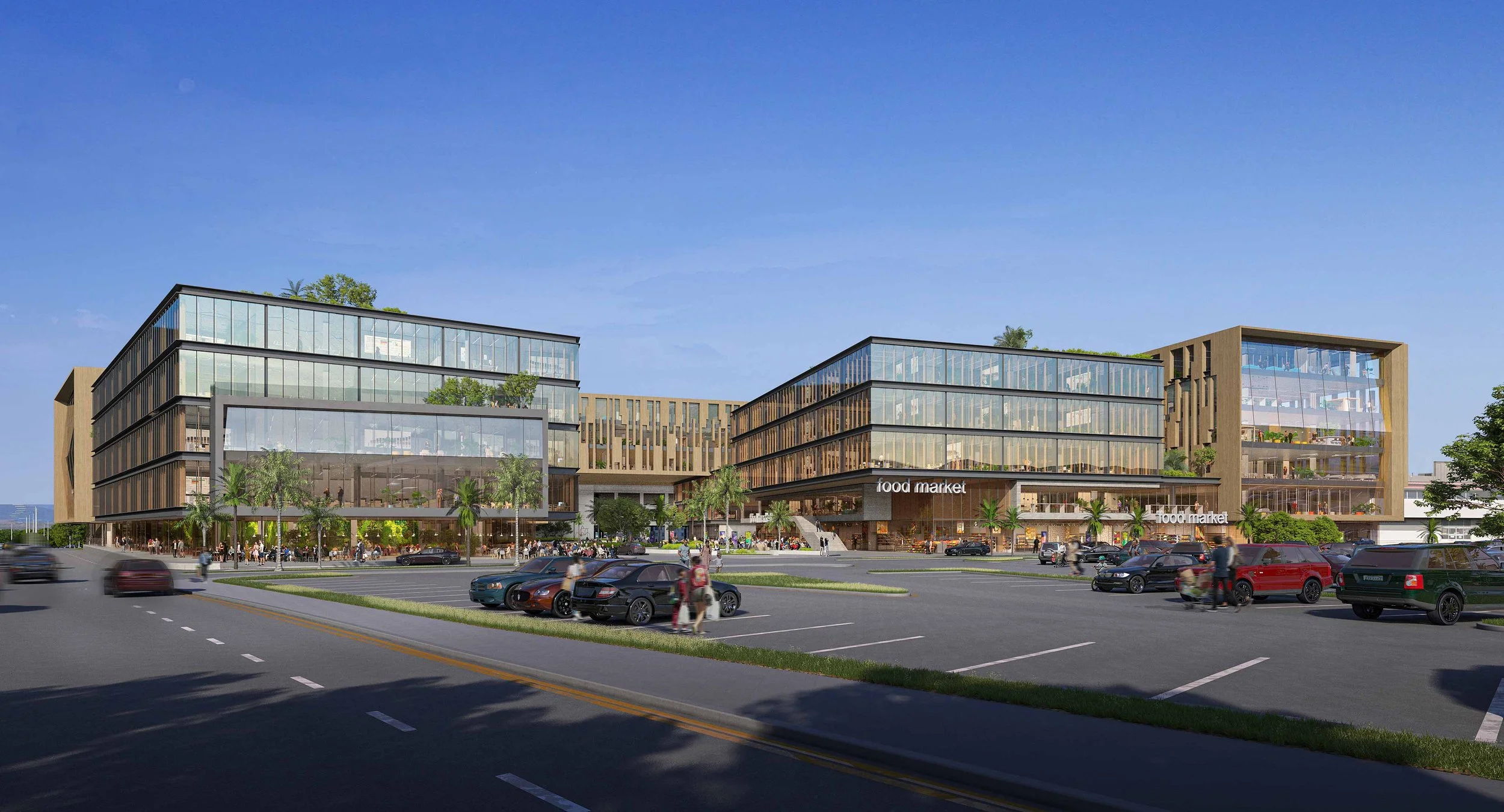
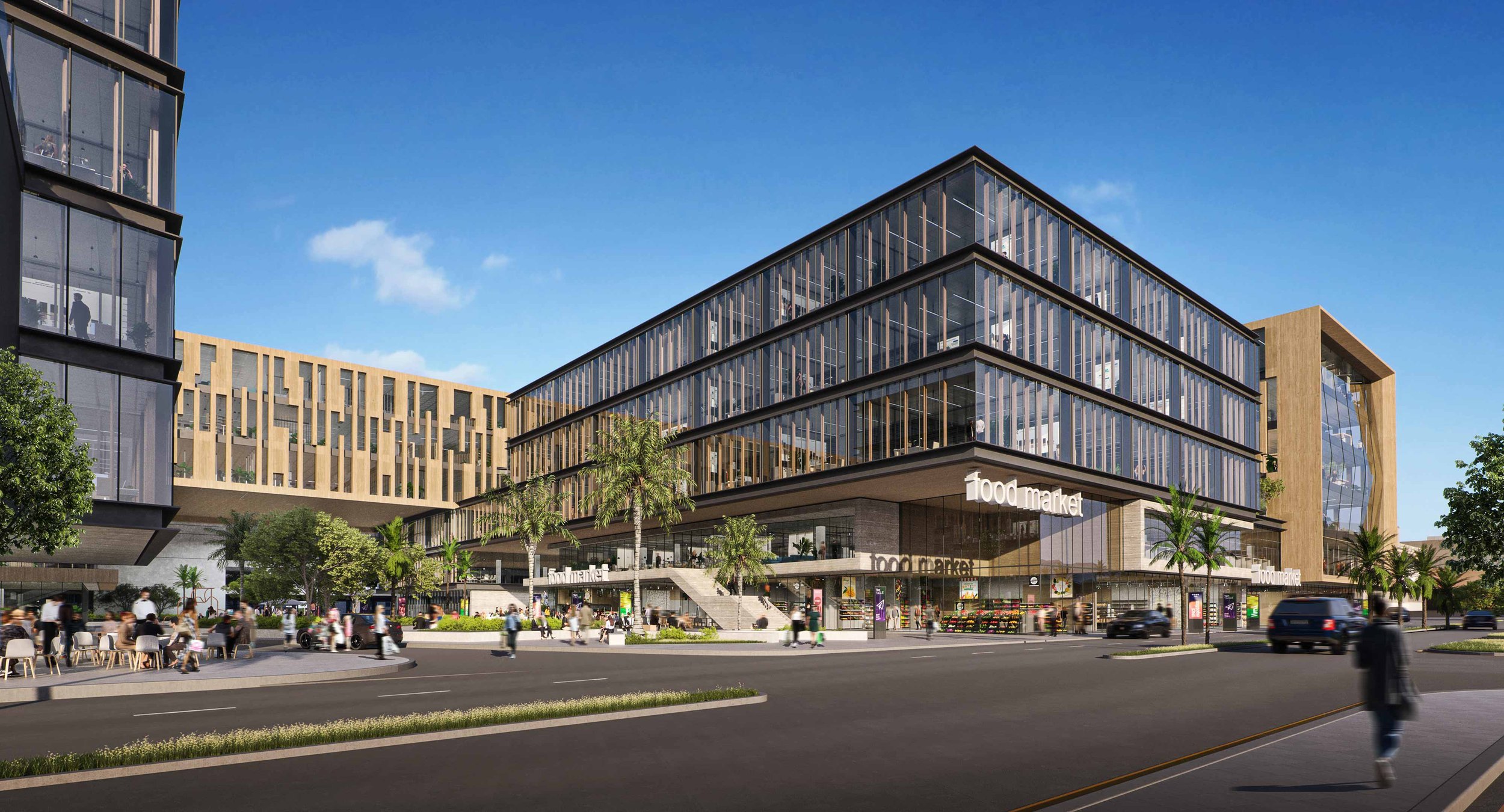
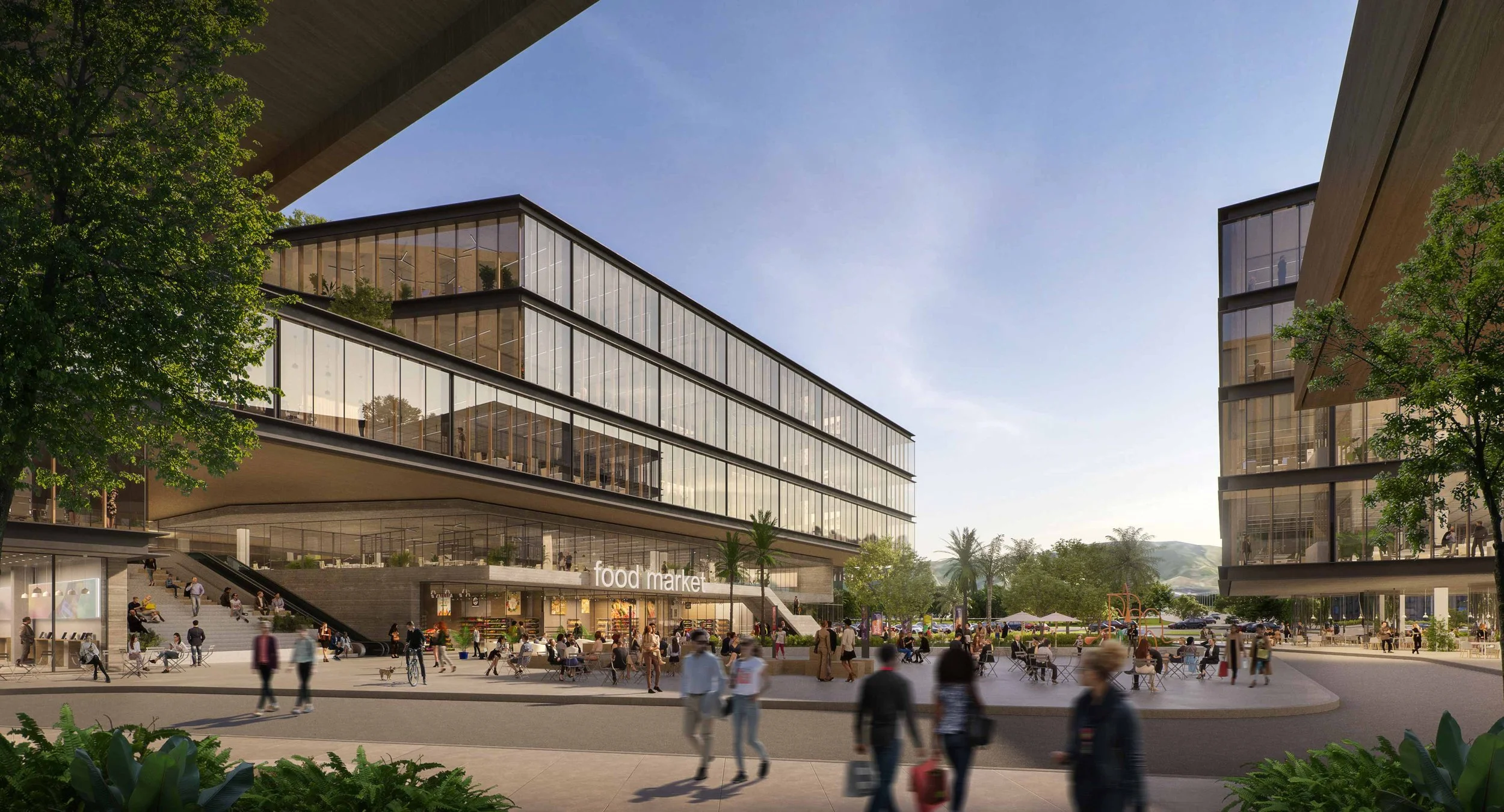
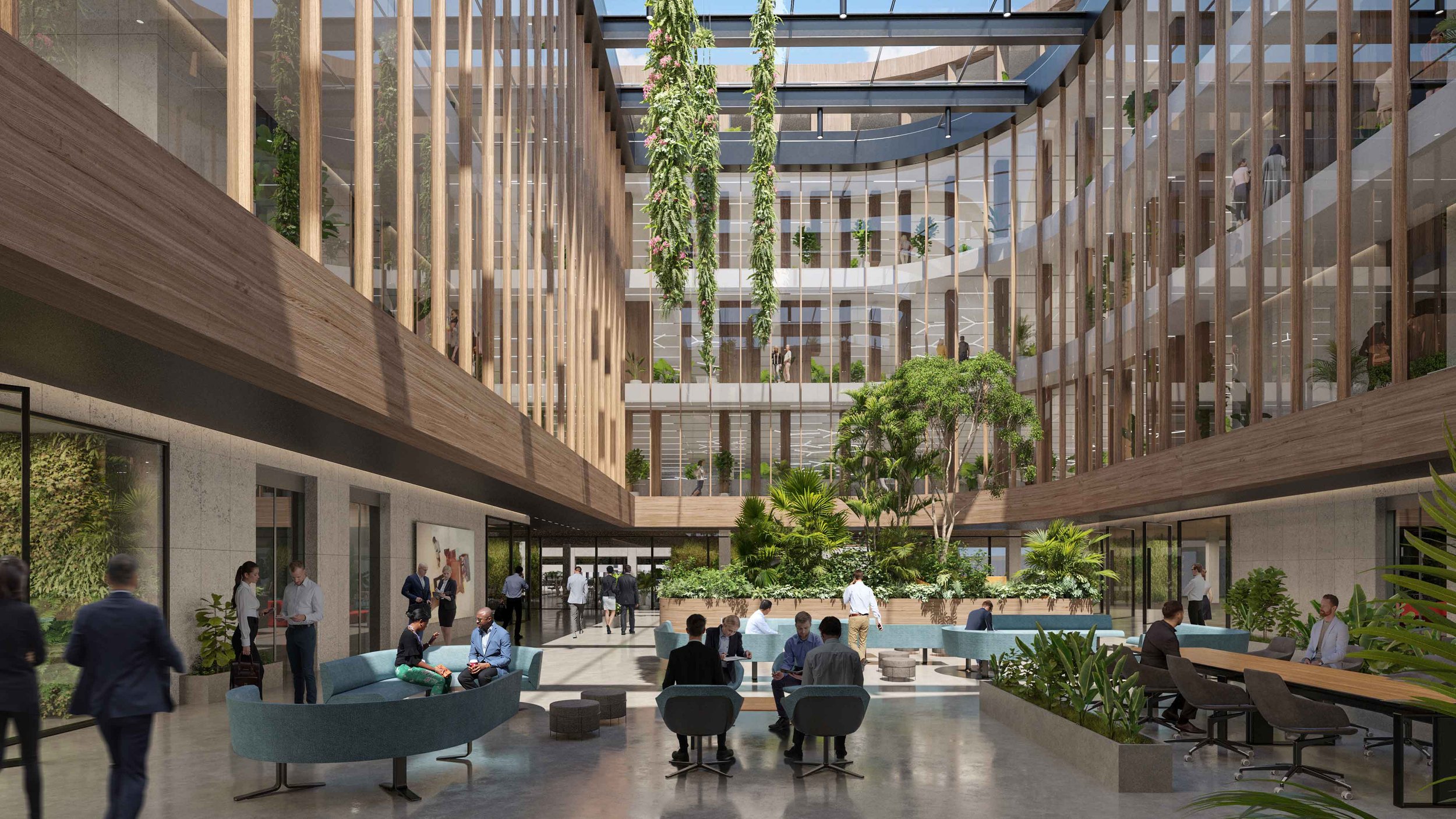
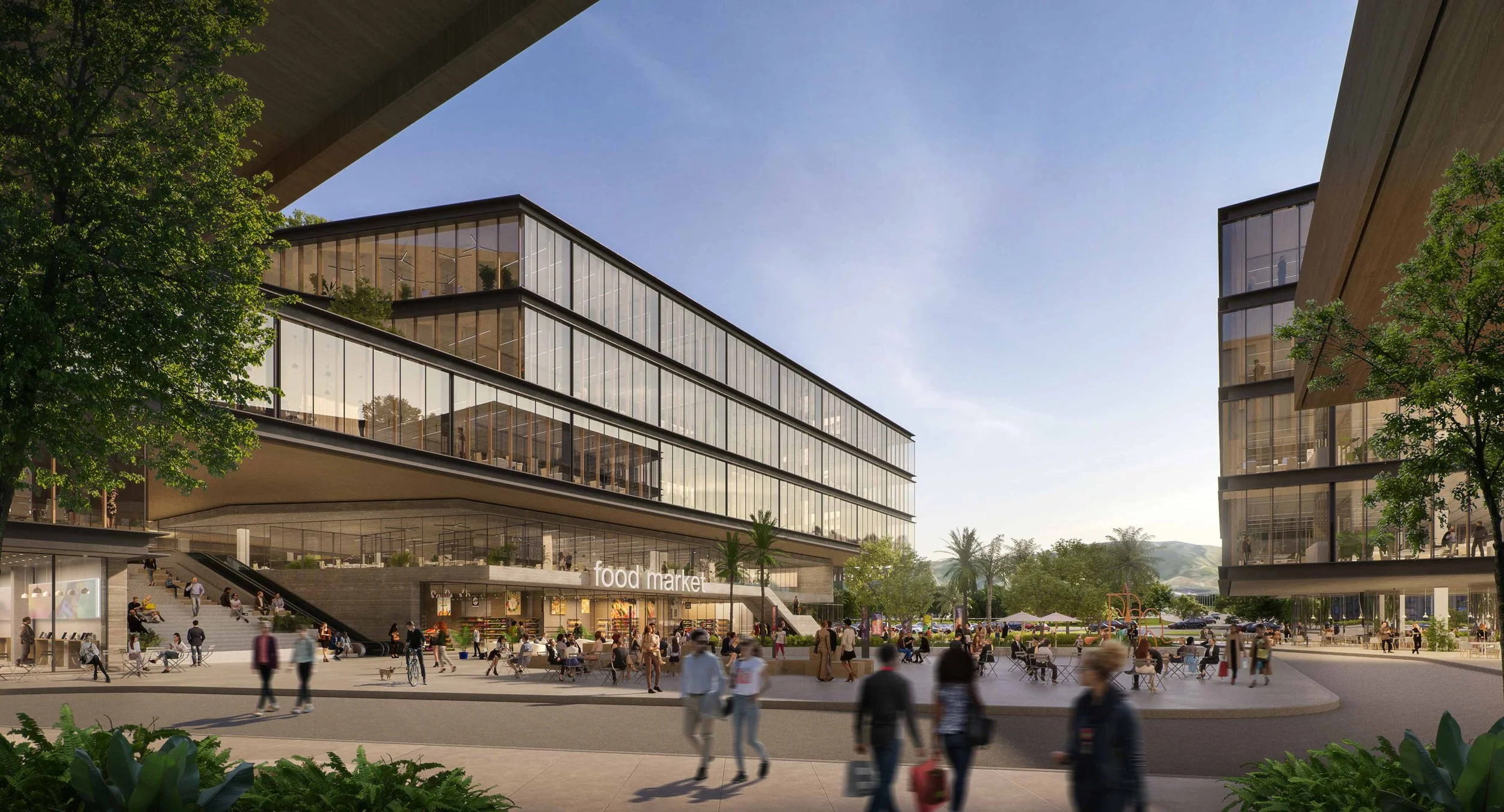
At ground level, the inward-facing mall typology is replaced with a mixed-use public realm defined by walkable streets, landscaped courtyards, and a central food market hall. Retail, dining, and shared amenities are integrated throughout, fostering interaction between researchers, workers, and the wider community. By relocating vehicular access to the perimeter, the design establishes a human-scaled environment that prioritises movement, wellbeing, and social engagement.
Above, the office and laboratory buildings are designed for long-term flexibility, with generous floor-to-floor heights and open floor plates that accommodate evolving technical requirements. Terraces and amenity decks are strategically oriented to maximise daylight and views, extending the workplace into outdoor environments and reinforcing a culture of collaboration and wellbeing across the campus.
The architectural expression reflects the dual nature of life sciences environments, combining robust, modular elements with lighter, more transparent volumes. Textured façades and increased glazing create a layered composition that balances precision with openness, marking the transition from a closed retail complex to a dynamic, innovation-led district.
Together, these strategies establish a new urban framework for Tanforan—transforming a legacy retail site into a resilient, mixed-use life sciences campus that supports research, community, and sustainable growth.
The design approach is rooted in the selective deconstruction and reinterpretation of the existing mall fabric. Rather than a singular, monolithic intervention, the proposal fragments the large-scale retail footprint into a series of interconnected volumes and open spaces, introducing a finer urban grain that supports permeability, daylight access, and programmatic diversity. The former Sears building, emblematic of the site’s retail past, is repurposed as a flexible life sciences anchor—its deep floor plates adapted to accommodate laboratory and research functions, while strategic cuts and insertions bring light into the core and establish new visual connections across the campus.
At ground level, the introduction of a mixed-use public realm is central to the project’s ambition. A network of pedestrian-oriented streets, landscaped courtyards, and a food market hall replaces the introverted mall circulation, creating an active and socially engaging environment. Food and beverage offerings are interwoven with shared amenities, fostering informal interaction between researchers, workers, and the broader community. The car is deliberately displaced to the periphery, allowing the heart of the site to be redefined as a walkable, human-scaled district that prioritizes experience, health, and environmental quality.
Above, the office and laboratory volumes are conceived with flexibility and adaptability at their core, supporting the evolving needs of life sciences tenants. Large, open floor plates are paired with generous floor-to-floor heights to accommodate technical requirements, while terraces and amenity decks are strategically oriented to the west to capture optimal daylight and views. These spaces are not treated as residual or internalized zones, but rather as extensions of the workplace—open to both inward-facing courtyards and outward urban edges, encouraging collaboration, well-being, and a sense of collective identity across the campus.
The architectural expression reinforces this transformation through a carefully calibrated duality. Lighter, more articulated volumes—defined by textured façades and increased transparency—are set against more robust, modular elements that reference the industrial logic of laboratory infrastructure. This layered composition reflects the coexistence of precision and openness inherent in life sciences environments, while also marking the transition from the closed, homogeneous mall typology to a more dynamic and collaborative urban district.
Together, these strategies establish a new architectural and urban framework for Tanforan—one that leverages its historical footprint while projecting a forward-looking identity. The result is a life sciences campus that is not only a place of research and innovation, but also a cohesive piece of city: open, connected, and resilient, capable of evolving alongside the industries and communities it serves.
-
Location: San Bruno, CA, USA
Project size: 64,103 m² / 690,000 ft²
Client: Seritage Growth Properties
Themes:
Life Sciences | Campus | Ground-up | Office | Build-to-Suit | Retail
Collaborators
Renders by Negativ