Schinkel Office Transformation
Mixed-use urban development integrating heritage, workspace, and living.
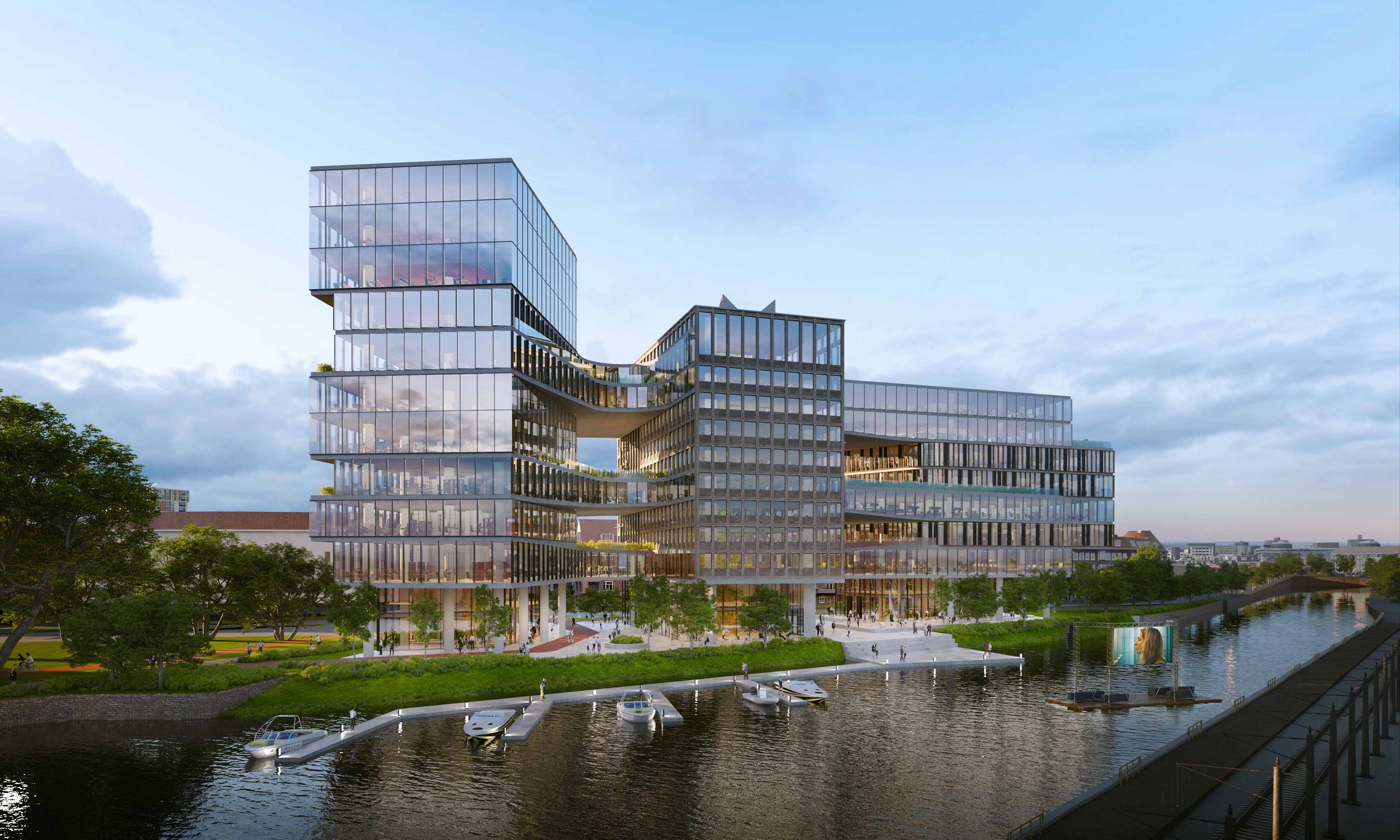
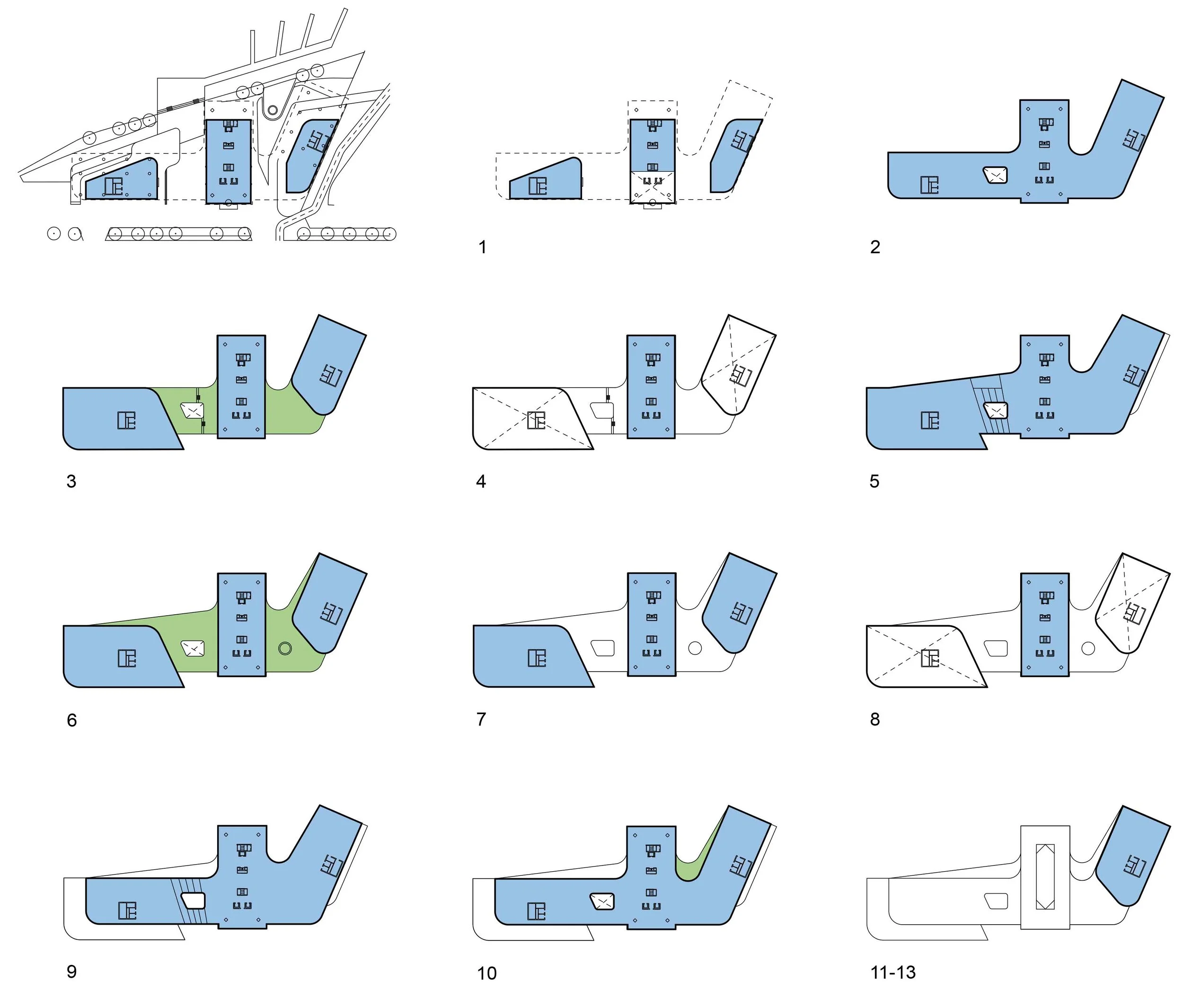
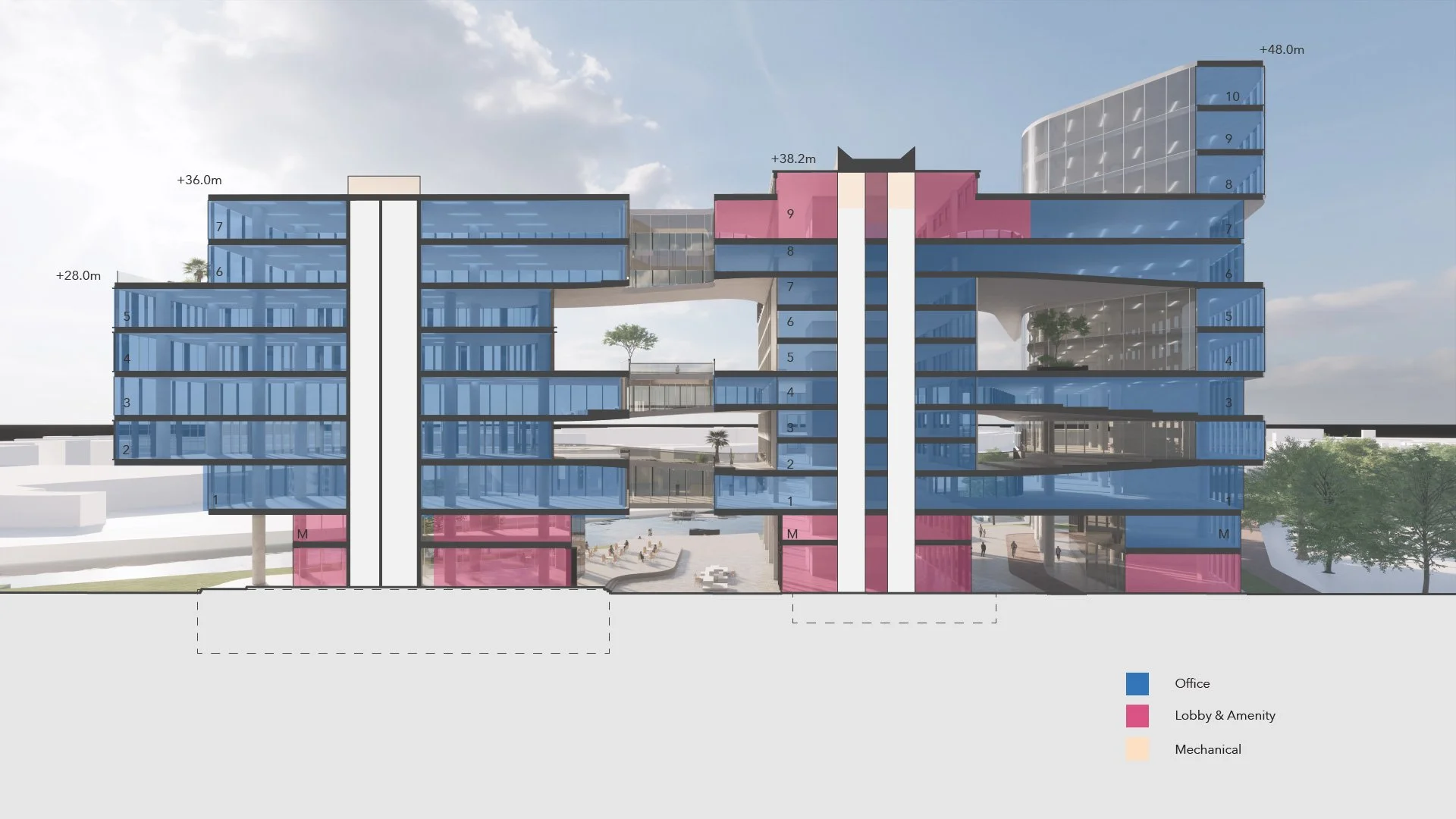
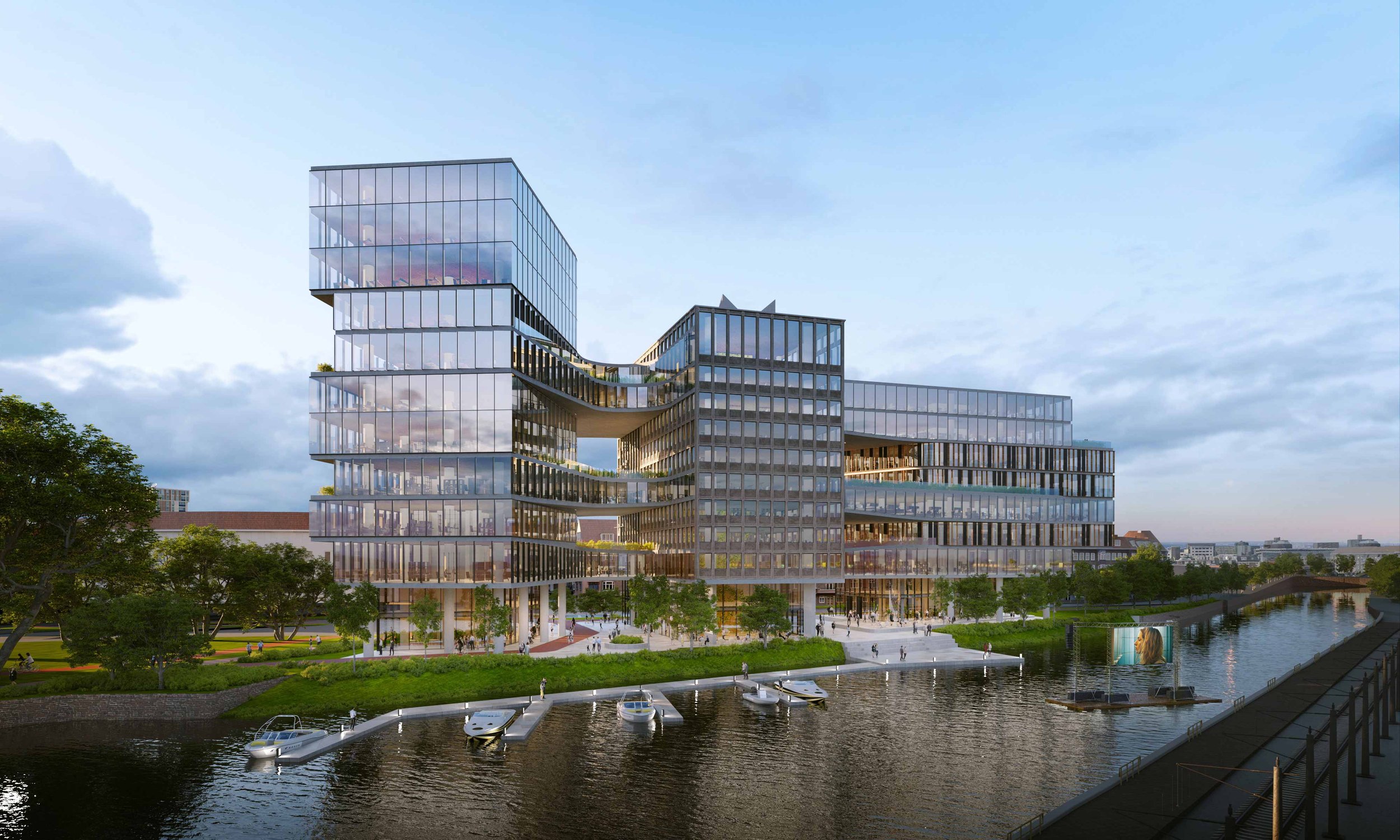
The Schinkel Development connects the existing structure of two separate buildings within the plot by bridging convex floor plates in a unified design. At its core, a historic office building is expanded through the addition of two new volumes—one office and one residential—both directly attached and integrated into the existing structure. These new buildings are further connected via a series of elevated skybridges, creating a cohesive architectural composition that enhances circulation, interaction, and visual continuity across the development.
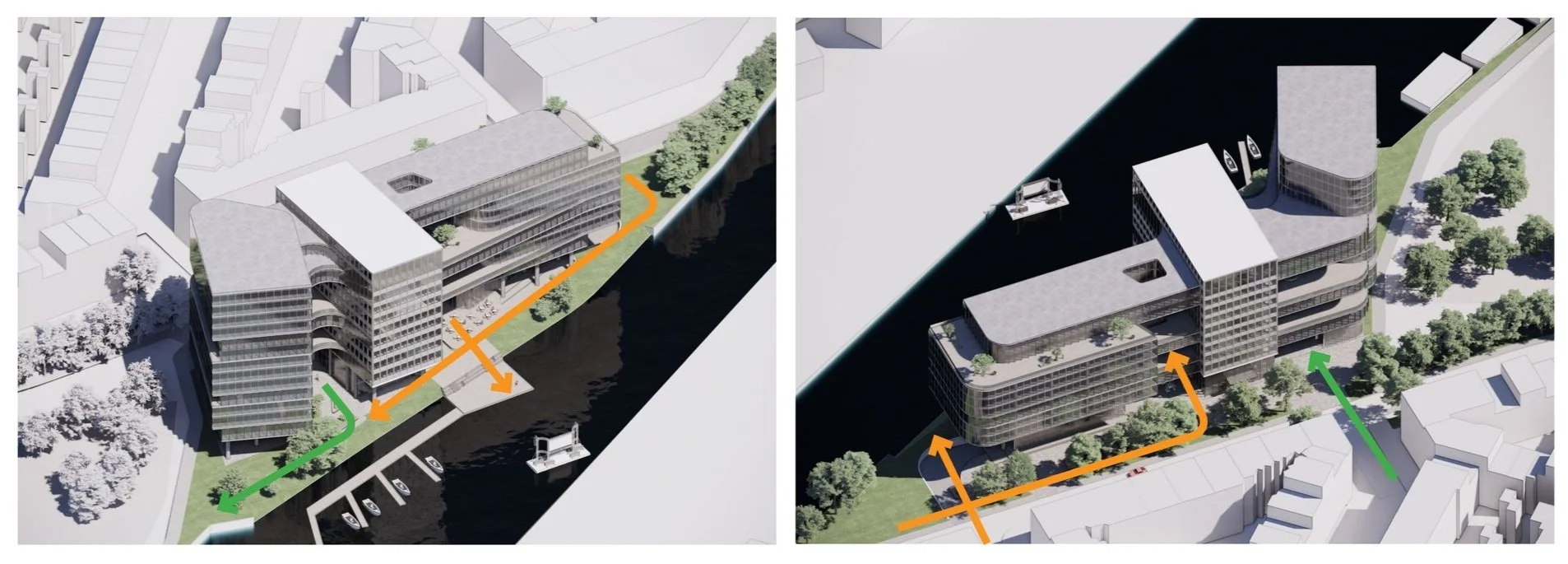
Large pedestrian and cycling arteries run underneath the proposed development, opening up to the Schinkel riverbanks and strengthening public access to the waterfront. This layered approach—combining heritage, new construction, and infrastructure—transforms the site into a dynamic mixed-use environment where working, living, and movement are seamlessly intertwined.
-
The Schinkel Office Transformation is a mixed-use development in Amsterdam that reimagines a historic office building as part of a larger urban composition integrating workspace, housing, and public infrastructure. Located along the Schinkel River, the project connects two previously separate buildings through a series of convex floor plates and elevated skybridges, creating a unified architectural system that enhances circulation, interaction, and spatial continuity.
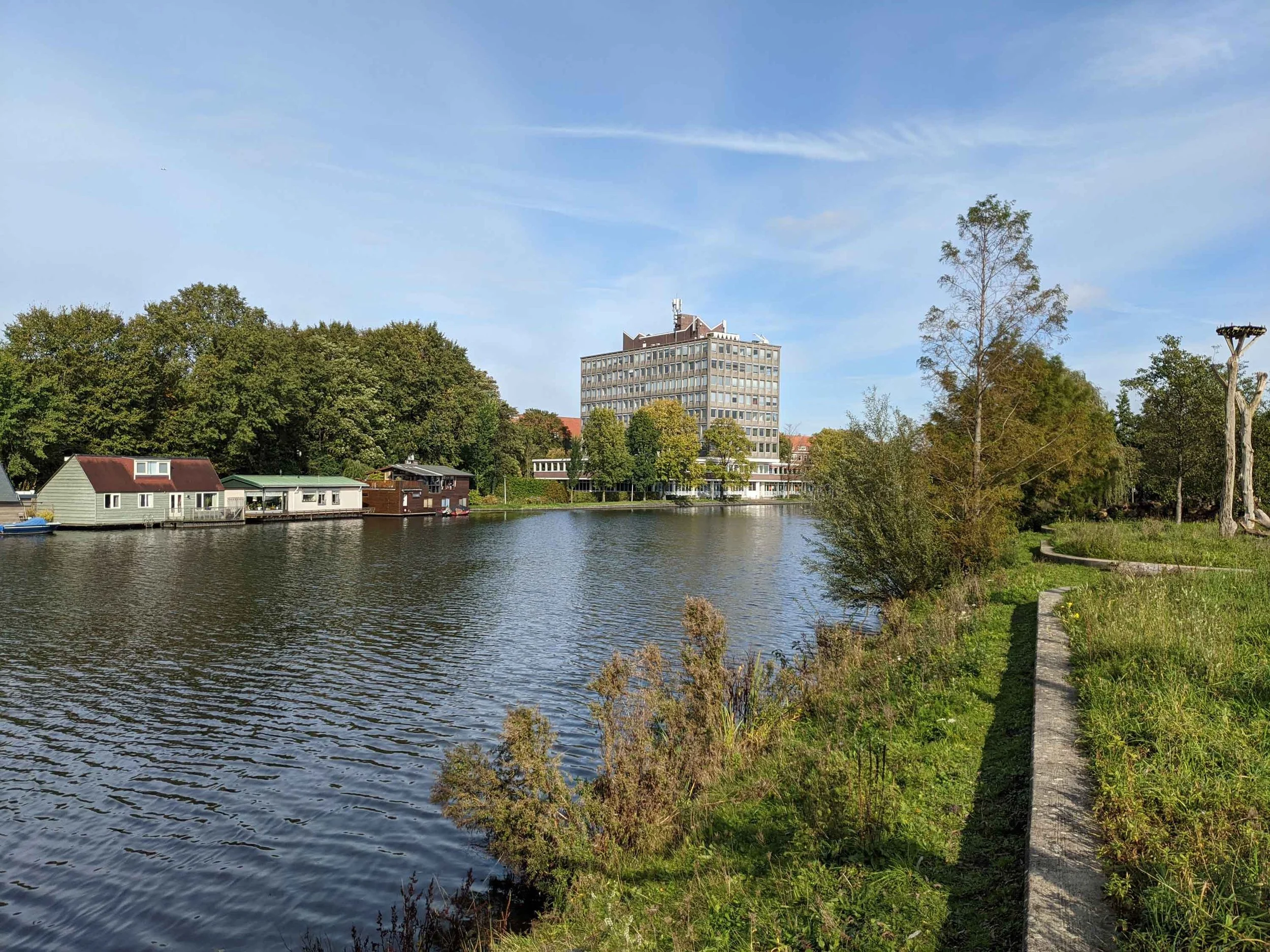
At its core, the transformation builds upon the existing 1968 office structure, originally designed as a modernist composition defined by its rectangular volume and wedge-shaped plinth. Rather than treating the building as a fixed artefact, the proposal reinterprets it as a flexible framework for adaptation. The original plinth is removed and replaced with two new volumes—one office and one residential—directly integrated into the existing structure and connected through a network of bridges that extend the programme horizontally across the site.
This strategy allows the architecture to operate across multiple levels simultaneously. By lifting portions of the building mass, the ground plane is opened up to accommodate pedestrian and cycling routes that run beneath the development, strengthening connections between the city and the Schinkel riverbanks. The introduction of a timber dock and active waterfront edge further reinforces this relationship, transforming the site into a more accessible and socially engaged urban environment.
The new volumes are carefully sculpted to balance density with permeability. Their tapered forms maximise daylight penetration, maintain key sightlines, and create a dynamic interplay between solid and void. Openings within the skybridges introduce lightwells that bring natural light deep into the building, while terraces formed by these connections provide outdoor workspace and moments of pause within the dense urban fabric.
The existing building is extended vertically and crowned with a contemporary reinterpretation of its original roof form, maintaining continuity with its architectural identity while accommodating new programme, including a double-height conference space with panoramic views over Amsterdam. Through this layered approach, the project merges heritage and contemporary design into a cohesive whole.
The Schinkel Office Transformation demonstrates how adaptive reuse can operate at an urban scale—combining preservation, new construction, and infrastructure to create a resilient mixed-use environment where working, living, and movement are seamlessly integrated.
-
Location: Amsterdam, The Netherlands
Areas: 20,000 m² / 215,278 ft²
Clients: Flow Real Estate
Themes: Adaptive Reuse | Office | Waterfront
Collaborators
Renders by Negativ