The Span Building
Structural transformation of a vacant office building
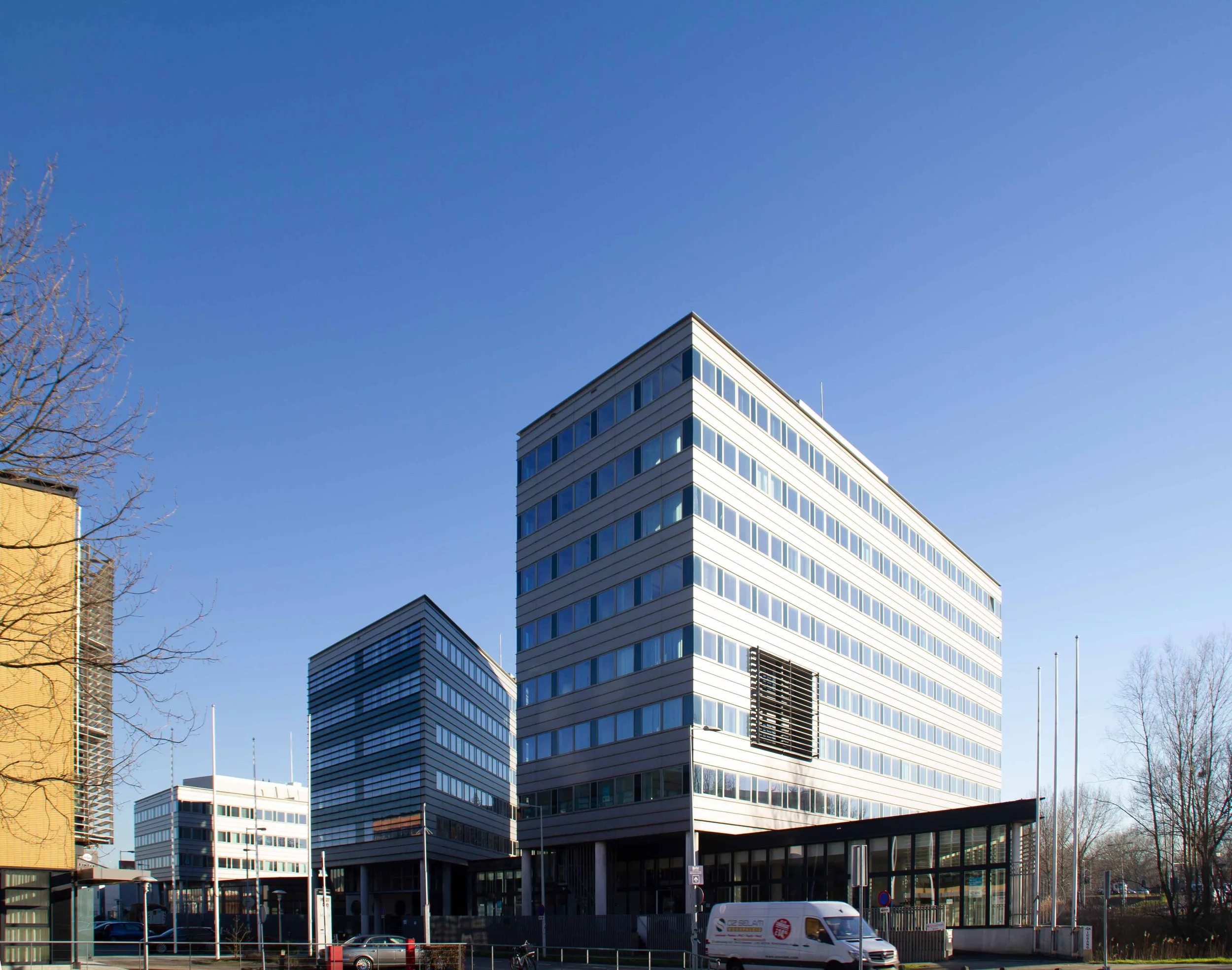
Buildings have an average lifespan of 20 years before being demolished to make way for ground-up construction, however, the opportunity to build on the structural resilience of this project inspired an alternative approach. In our design we recognized the chance to give the structure a second life by identifying spatial, structural and material qualities that can be improved, altered and reused. The Span Building is a structural reuse project transforming a vacant office into a flexible workspace through extensions, façade upgrades, and regenerative design. The proposal builds on the existing structure to create a future-ready environment while significantly extending the building’s lifespan.
-
The Span Building – Structural Transformation Through Reuse
The Span Building is a transformative adaptive reuse project that reimagines a vacant office structure as a flexible and future-ready workspace. Rather than defaulting to demolition, the design builds upon the existing structural framework, extending the life of the building through targeted interventions that enhance performance, usability, and architectural identity.
At the core of the project is a shift in perspective—from viewing buildings as finite objects to understanding them as open systems capable of evolution. The existing structure is carefully analysed to identify opportunities for spatial reconfiguration, structural extension, and material reuse. This approach allows the building to adapt to changing needs while retaining its embodied value.
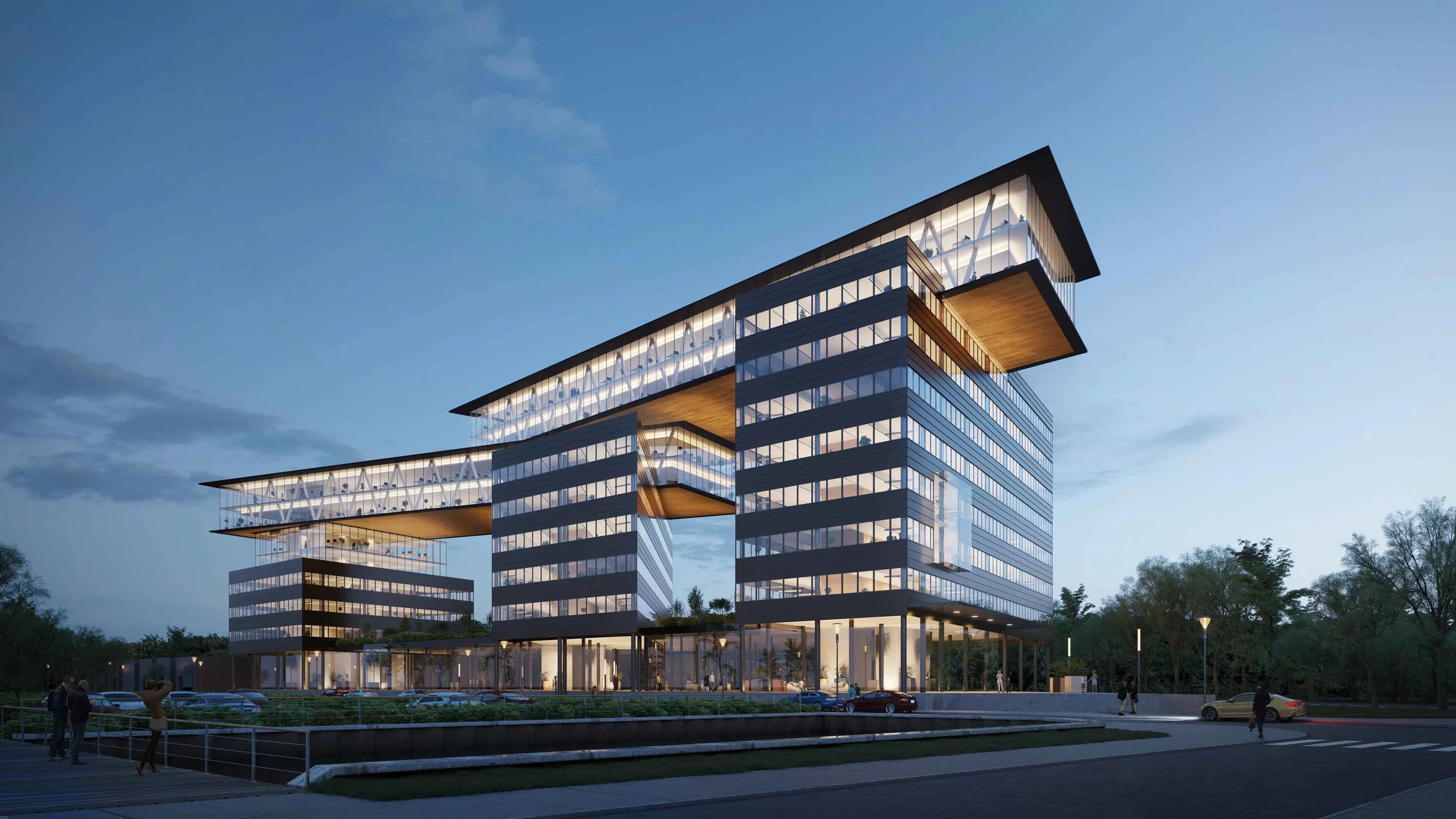
A key intervention introduces new volumes above the existing cores, fundamentally reorganising the building’s circulation and spatial logic. These additions are connected through a continuous loop, linking the different parts of the building both horizontally and vertically, and creating a more cohesive and efficient environment.
Structurally, the project leverages and reinforces the existing cores to support additional loads, enabling vertical expansion without compromising stability. A spanning Warren truss system defines the new intervention, providing both structural clarity and a distinct architectural expression that contrasts yet complements the original building.
At the façade level, the strategy focuses on retention and performance upgrade. The lower levels maintain their existing envelope, while recladding and high-performance glazing improve energy efficiency, daylight quality, and user comfort. This layered approach preserves the building’s contextual continuity while aligning it with contemporary environmental standards.
The Span Building exemplifies a regenerative architectural approach—one that prioritises reuse, adaptability, and long-term resilience. By extending the building’s lifecycle and embedding flexibility into its design, the project offers a compelling alternative to demolition, demonstrating how existing structures can be transformed to meet future demands.
This approach challenges the conventional perception of existing buildings as fixed and inflexible. While many structures possess a long physical lifespan, their rigidity in planning often limits their ability to accommodate new uses. Here, adaptability is embedded through targeted spatial reconfiguration. The ground plane is reworked to improve permeability and access to the podium, establishing a more legible and connected base. Above, the introduction of two additional volumes atop the existing cores transforms the building’s organizational logic: circulation is reconceived as a continuous loop, linking the three volumes both horizontally and vertically. This circular movement not only enhances functional efficiency but also fosters a more cohesive spatial experience across the complex.
Structurally, the intervention builds directly upon the capacity of the existing cores. These are reinforced and extended to support new vertical loads, enabling the addition of further floors without compromising stability. Spanning between them, a Warren truss structure provides both structural integrity and architectural expression—articulating the extension as a lightweight yet robust insertion that distinguishes itself from the original mass while remaining intrinsically connected to it. This hybridization of old and new underscores a design philosophy rooted in augmentation rather than replacement.
At the envelope, the strategy is one of retention and refinement. The existing façade of the lower buildings is preserved, maintaining continuity with the surrounding context while significantly upgrading performance through recladding and the introduction of high-performance glazing. These interventions reduce operational energy demands and improve internal comfort, aligning the building with contemporary environmental standards.
Together, these measures establish a model for regenerative architecture—one that leverages the embodied value of existing structures while equipping them for future adaptability. By extending the life of the building through thoughtful transformation, the project demonstrates how resilience, flexibility, and sustainability can be synthesized into a cohesive architectural vision.
-
Location: Amsterdam, The Netherlands
Project Size: 27,300 m² / 293,854 ft²
Client: Angelo Gordon | APF International
Themes: Adaptive Reuse | Office
Collaborators: Render by ZOA