Tidescape: Incheon Museum Park
Art Exhibition and Masterplan Design of new & existing historic buildings
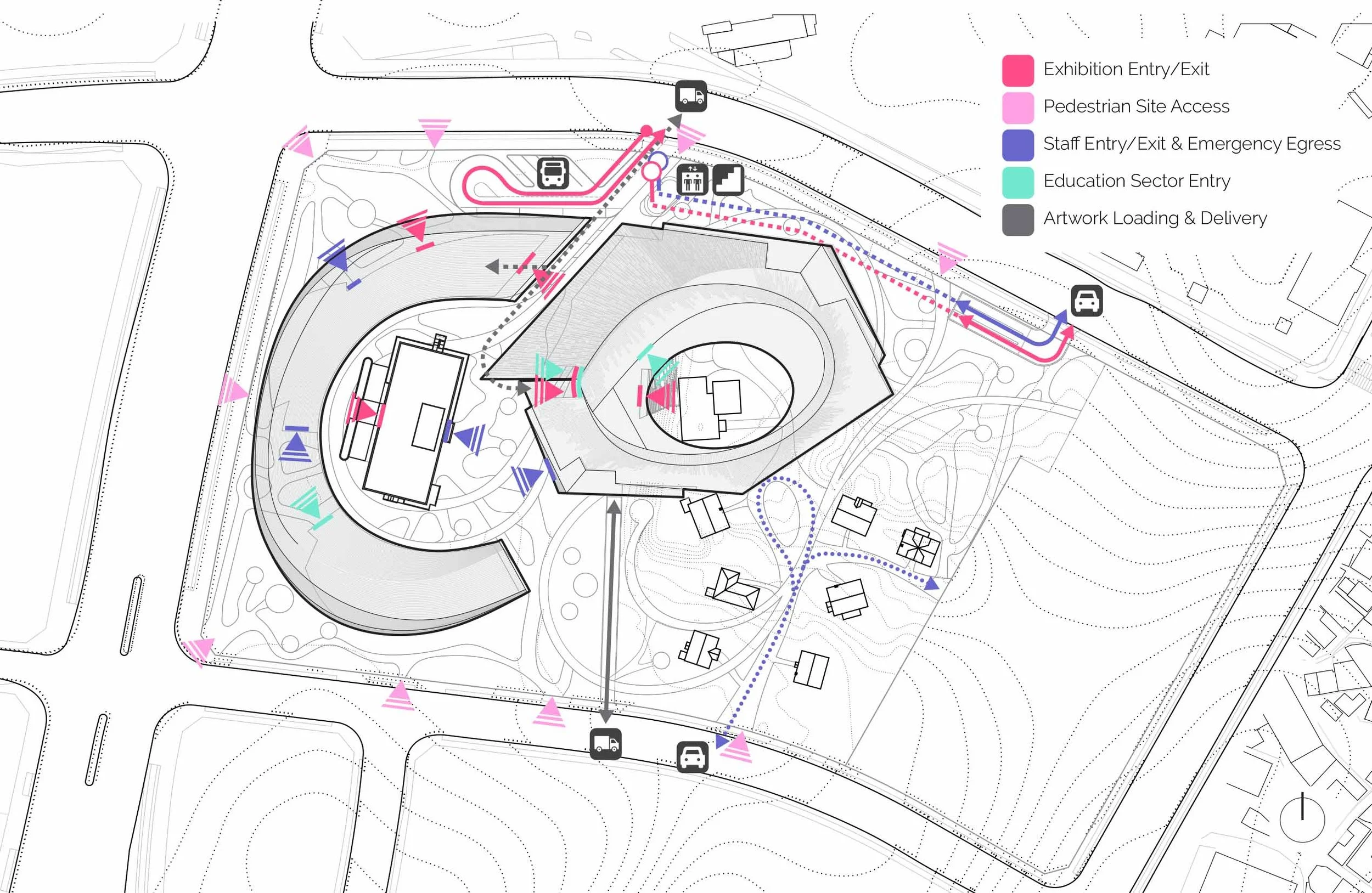
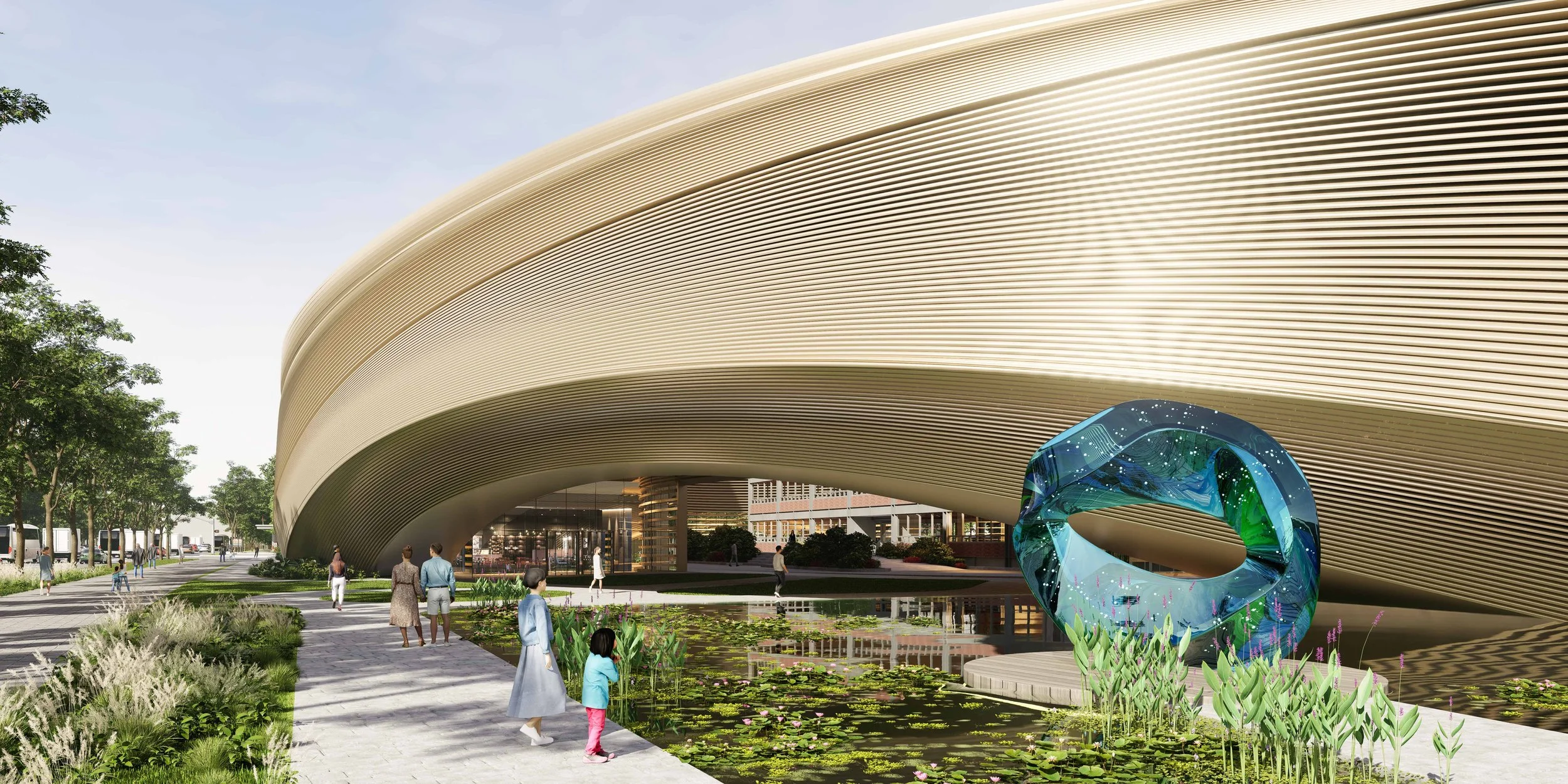
Tidescape is a cultural masterplan in Incheon that brings together museums, historic buildings, and landscape into an inclusive and connected public destination. Conceived as more than a singular cultural complex, the project is designed to function as an extension of everyday life—welcoming visitors of all ages and backgrounds, from local communities to international audiences. The vision prioritises accessibility and inclusivity, creating spaces that support both quiet reflection and active social engagement, while also responding to the energy and dynamics of younger generations.
Through a careful integration of architecture and landscape, the design establishes a cohesive park environment that encourages repeat visits and evolving experiences over time. By embedding cultural programmes within a flexible, open framework, the project seeks to democratise access to culture—offering a setting where art, history, and public life intersect in a way that is both approachable and deeply rooted in the identity of Incheon.
-
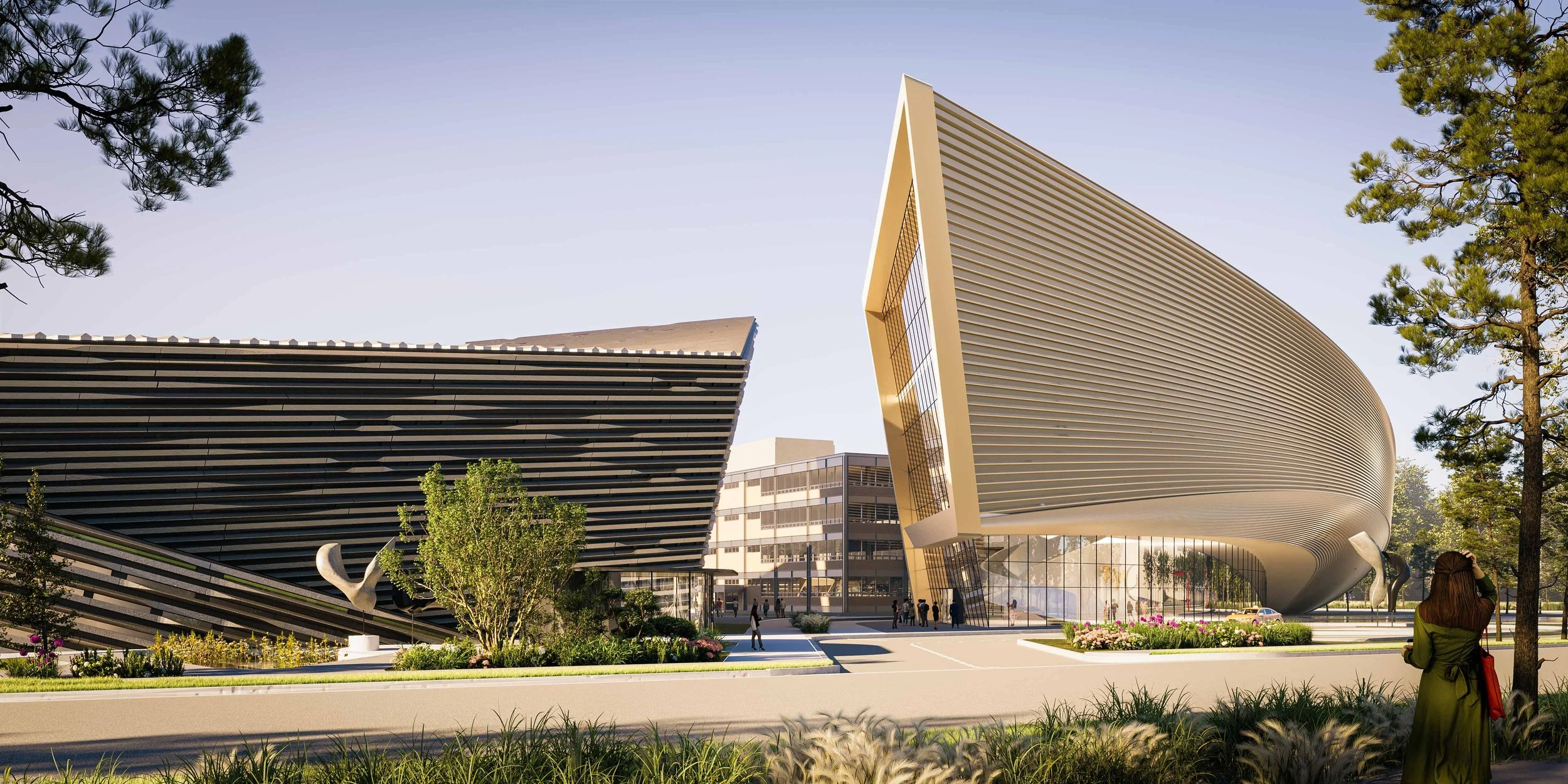
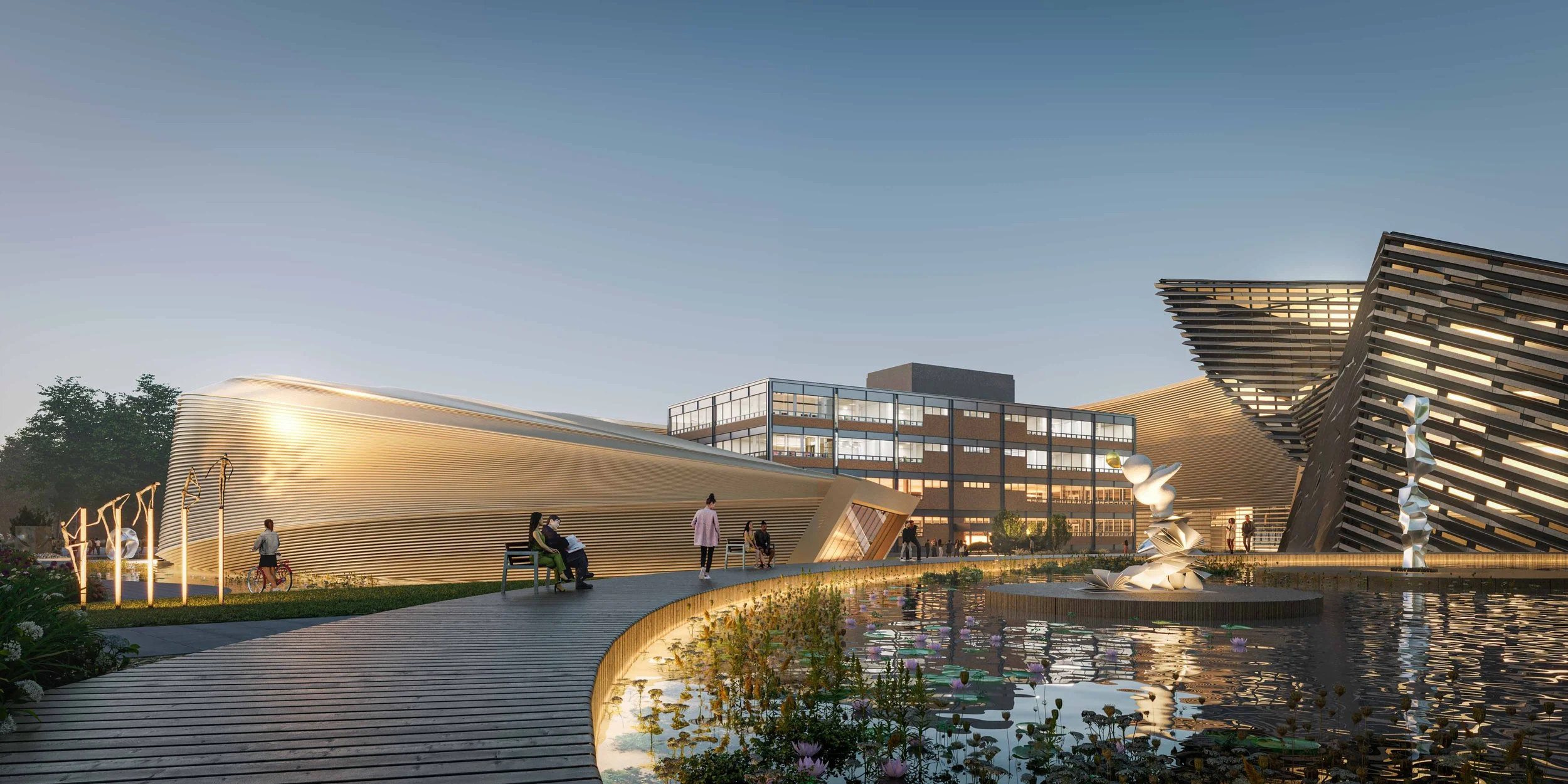
Tidescape is a cultural masterplan for Incheon Museum Park that brings together new museums, historic buildings, and landscape into a cohesive and inclusive public destination. Designed as an extension of everyday life, the project creates a layered cultural environment that welcomes diverse audiences—balancing spaces for reflection and accessibility with dynamic areas that support social interaction and discovery.
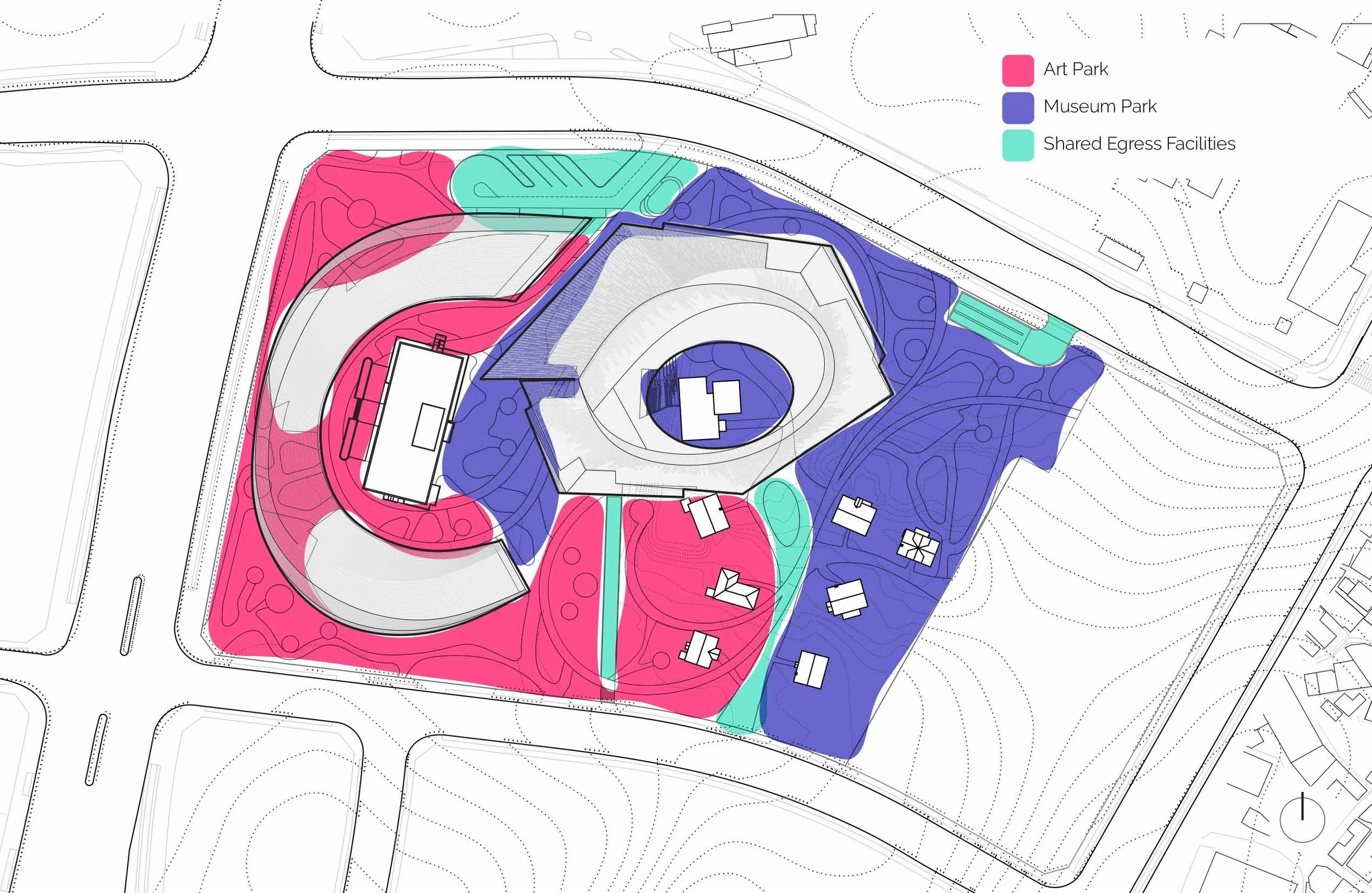
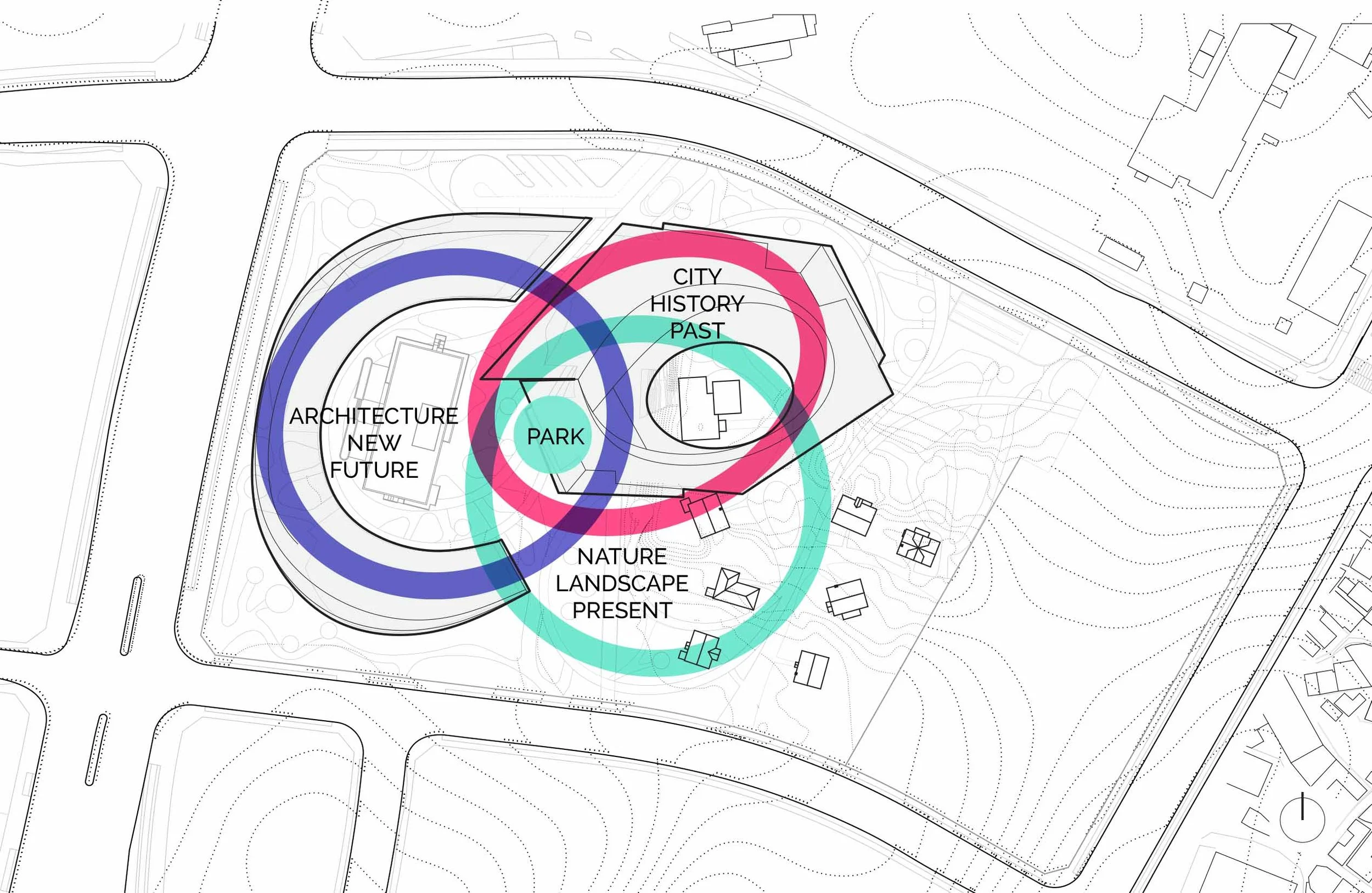
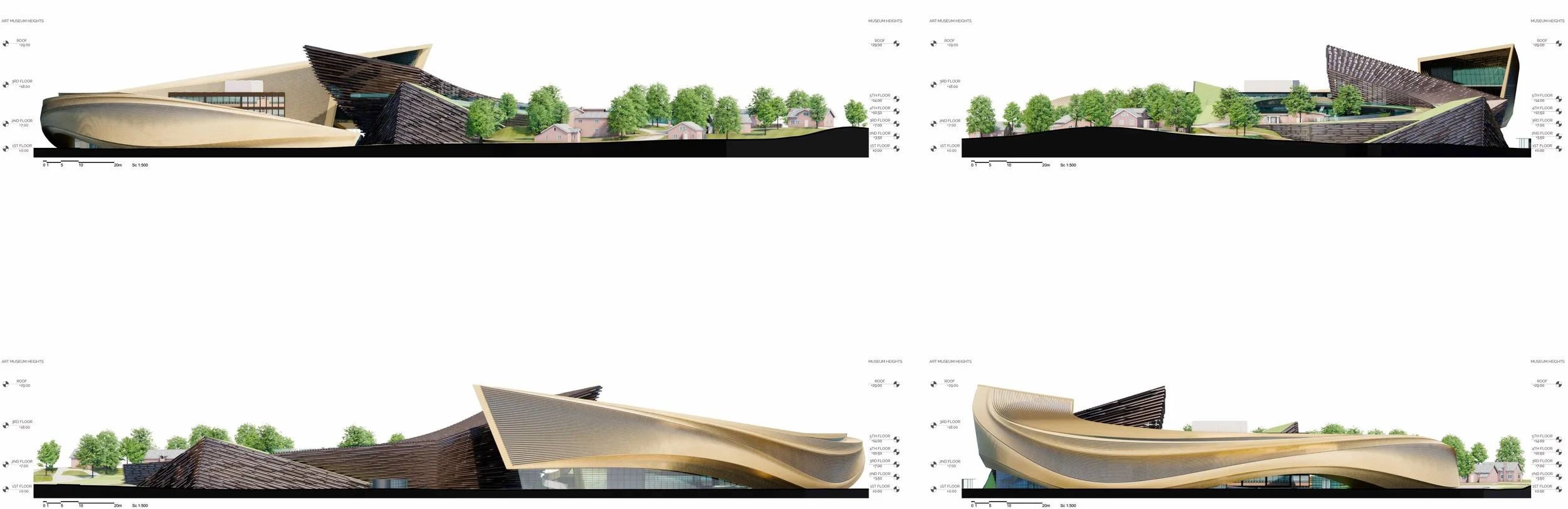
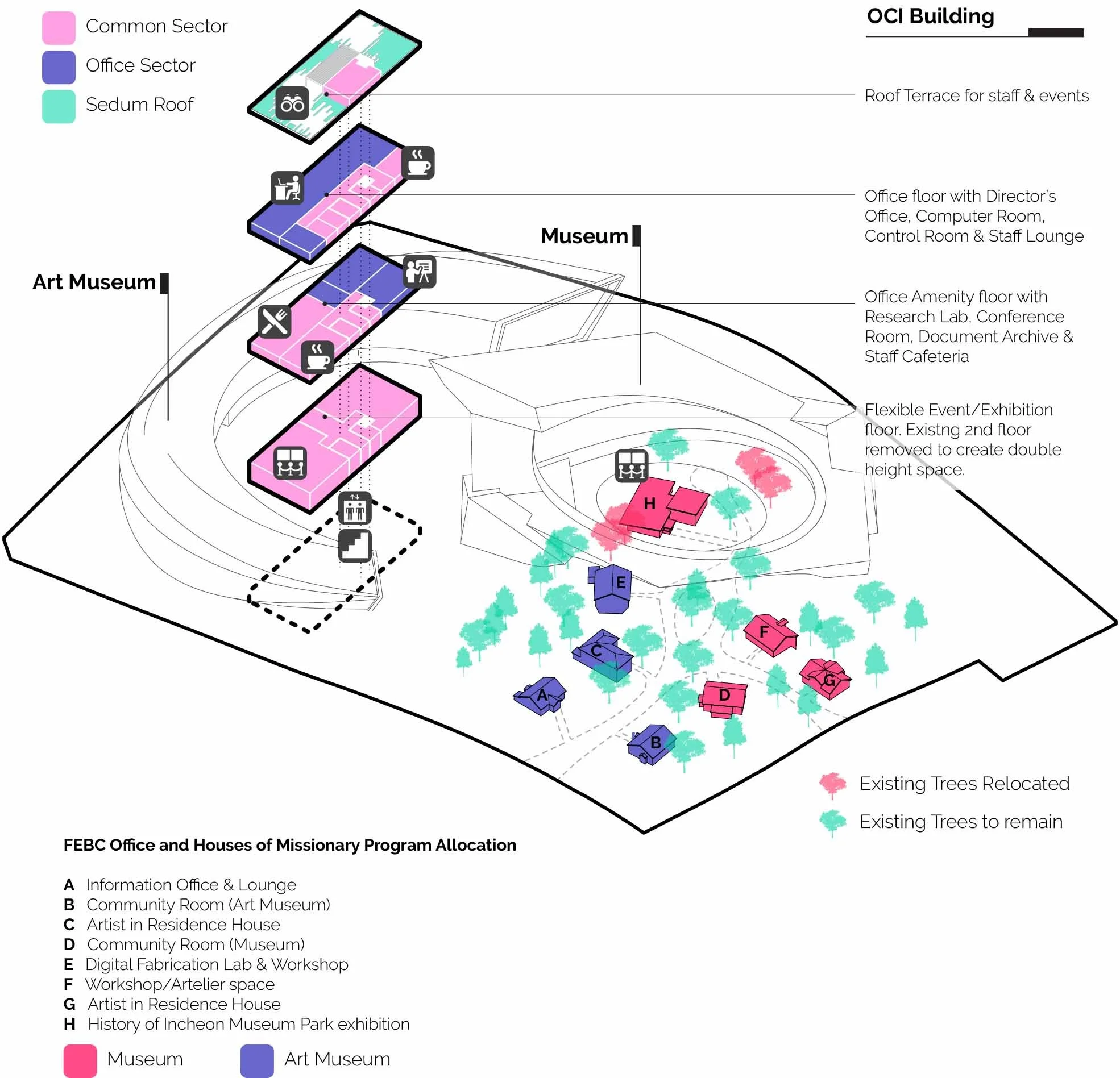
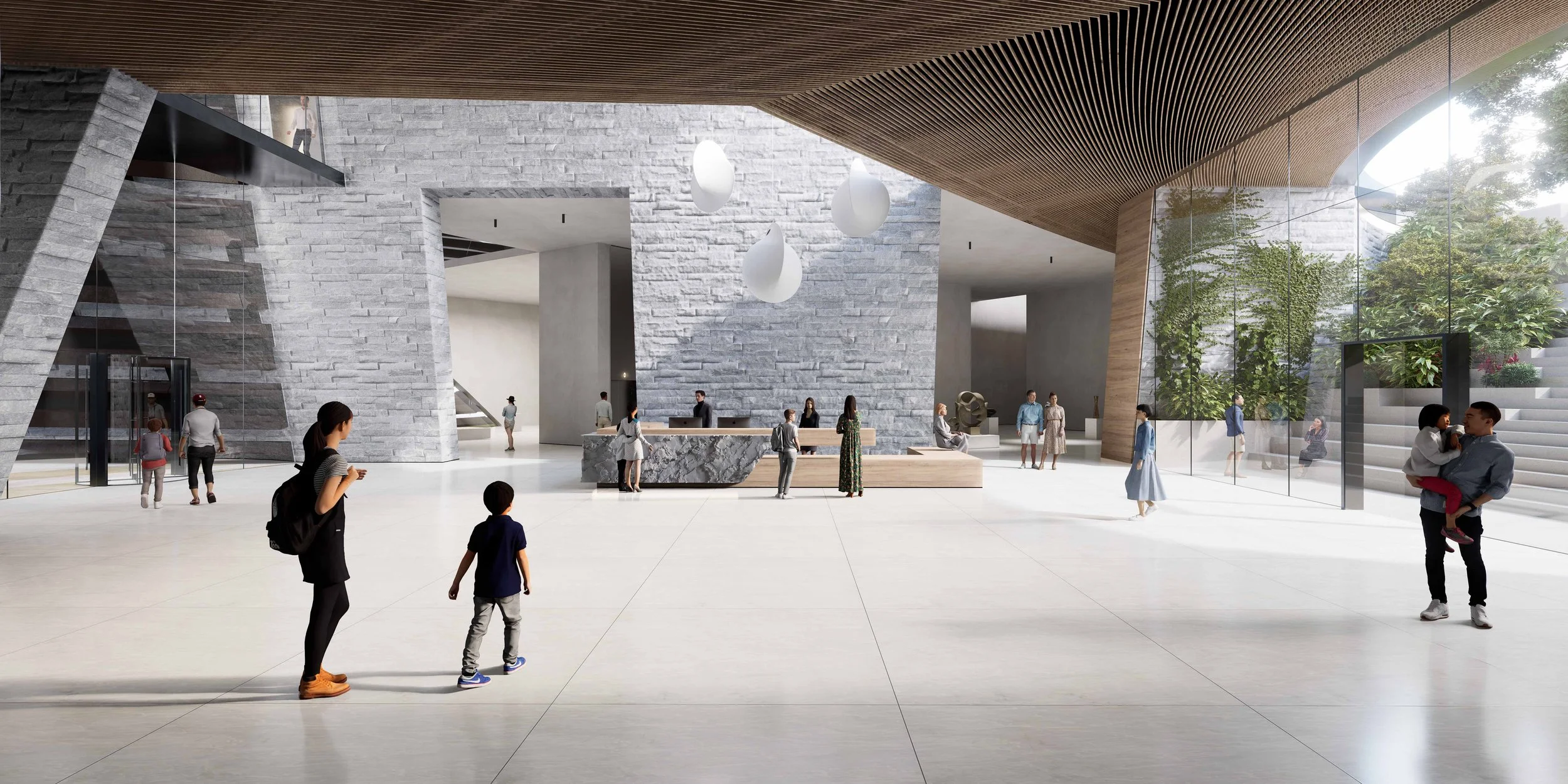
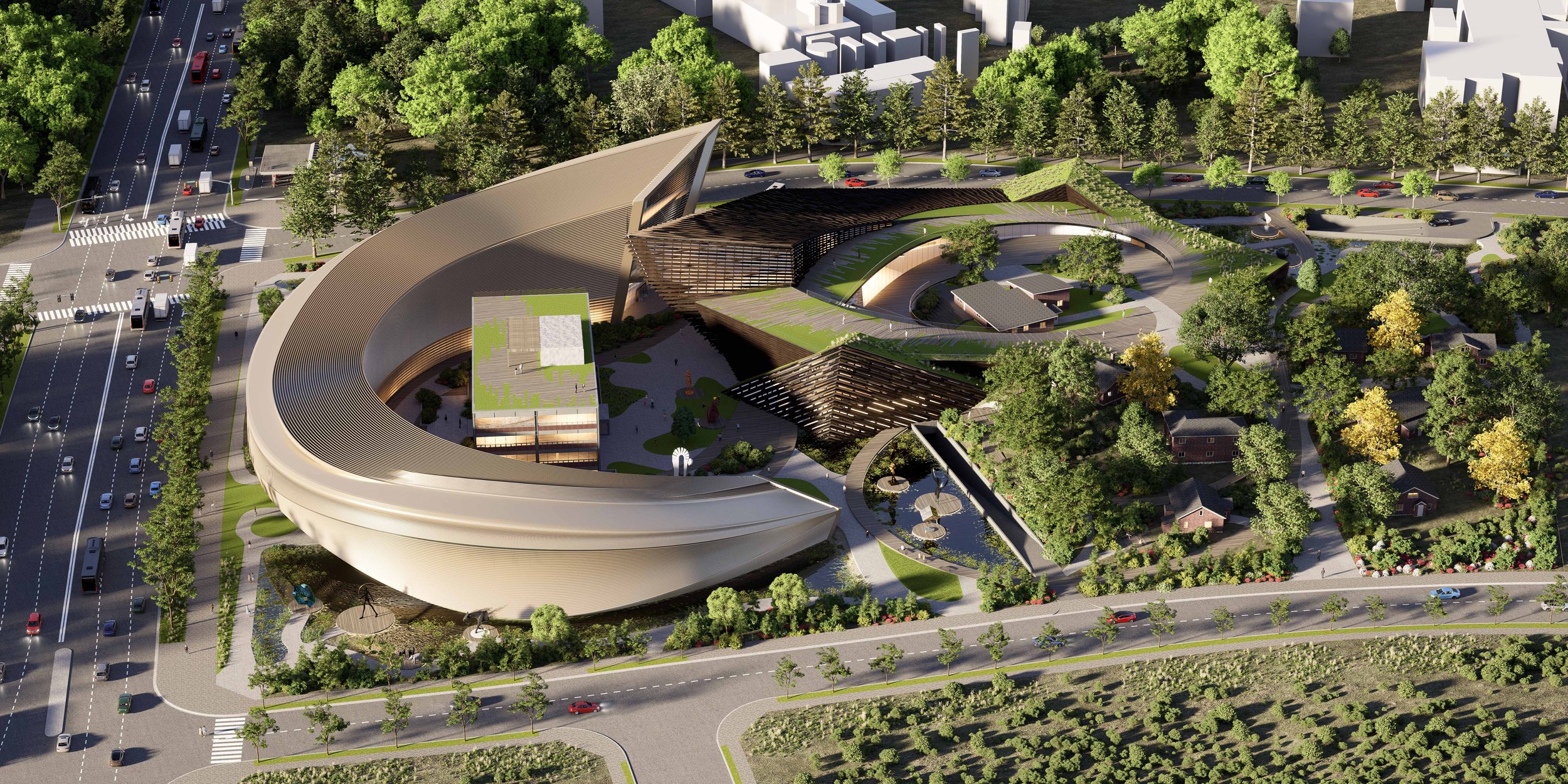
At the core of the proposal is the preservation and integration of existing historic buildings, which are retained in their original positions and embedded within a broader landscape strategy. Rather than treating these structures as isolated artefacts, the design frames them through the placement of two new museum buildings, creating a dialogue between past and present. The new Art Museum and History Museum are shaped as complementary crescent forms that organise the site into interconnected loops, guiding visitors through a sequence of cultural experiences.
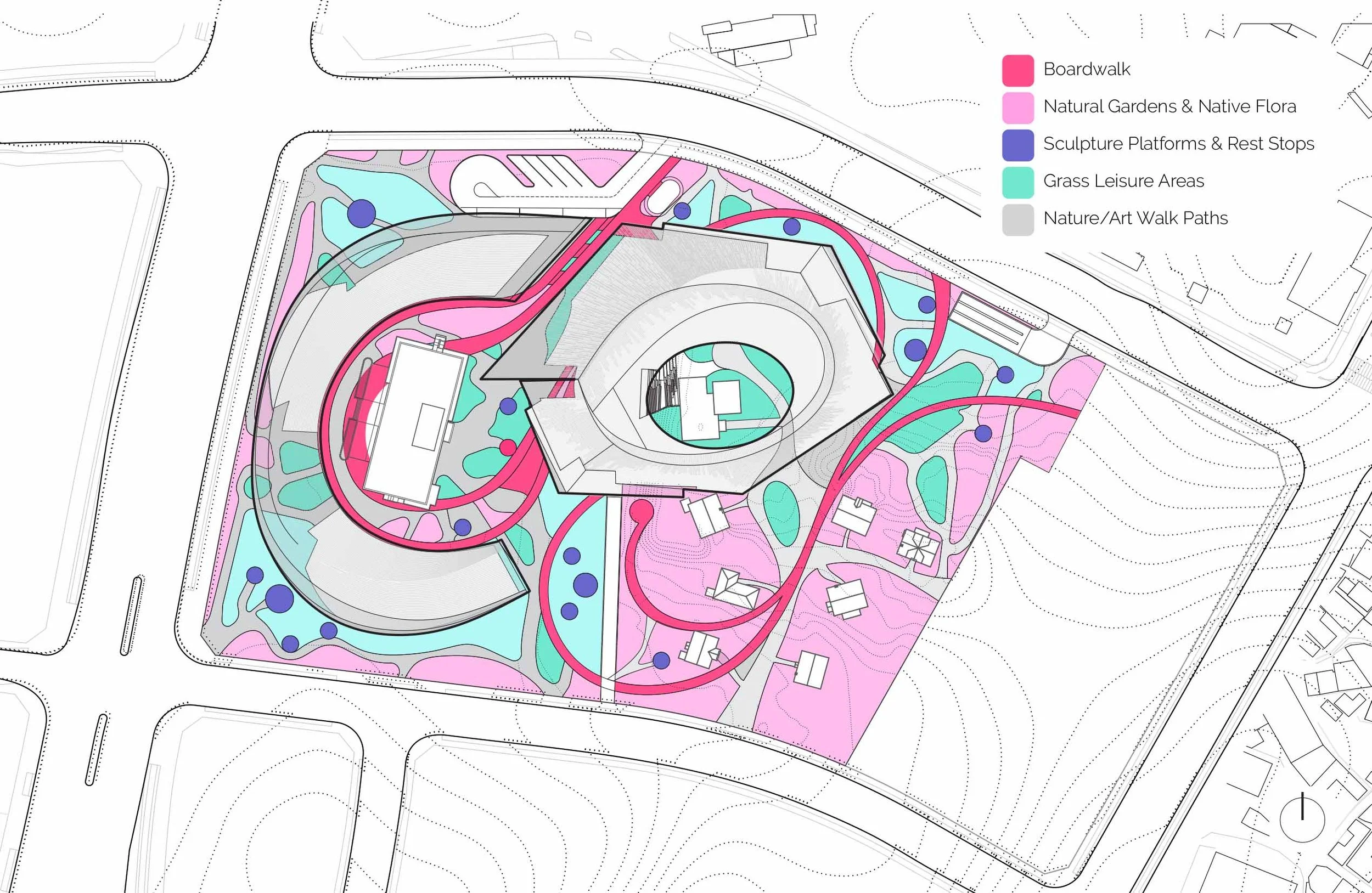
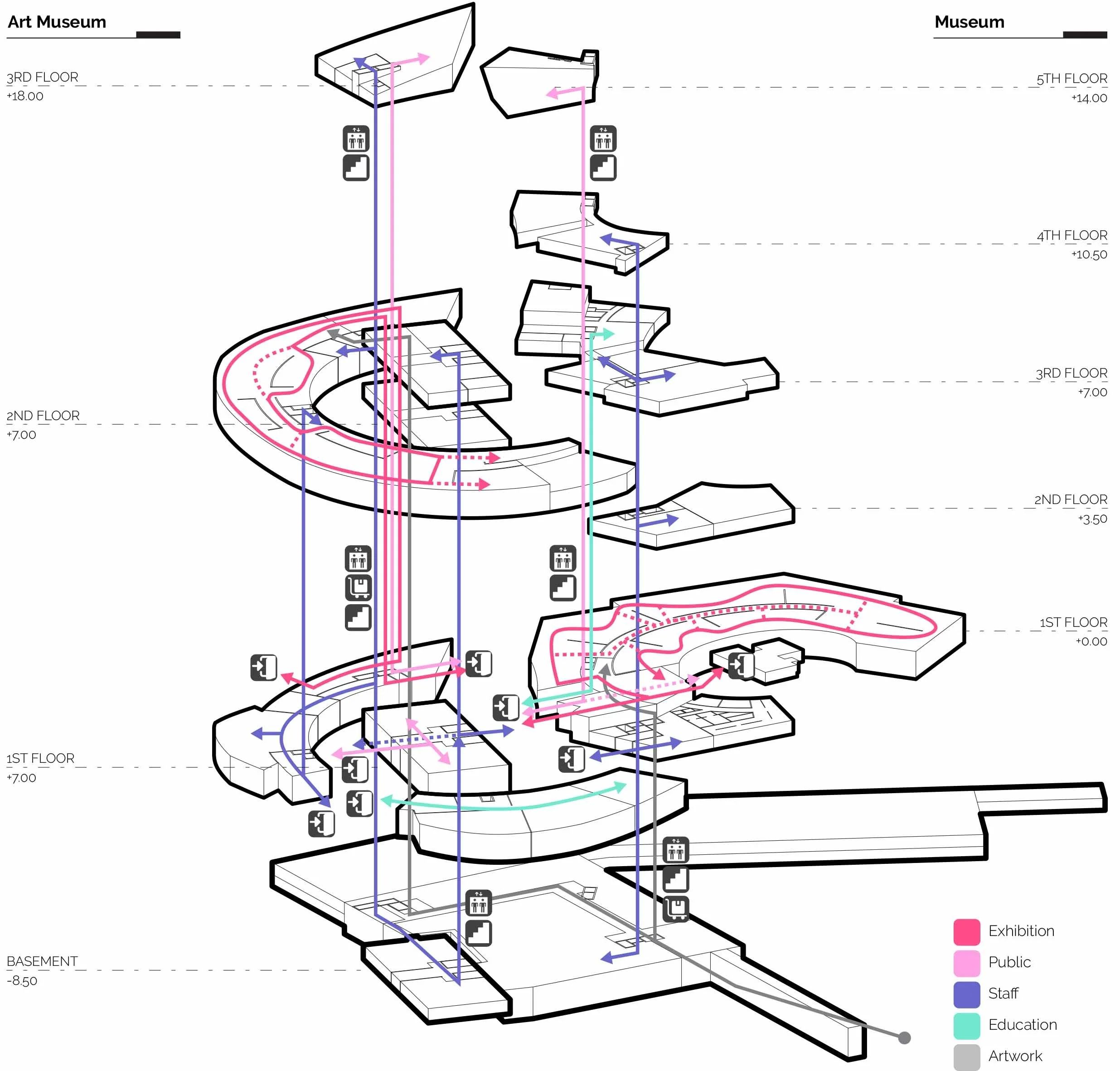
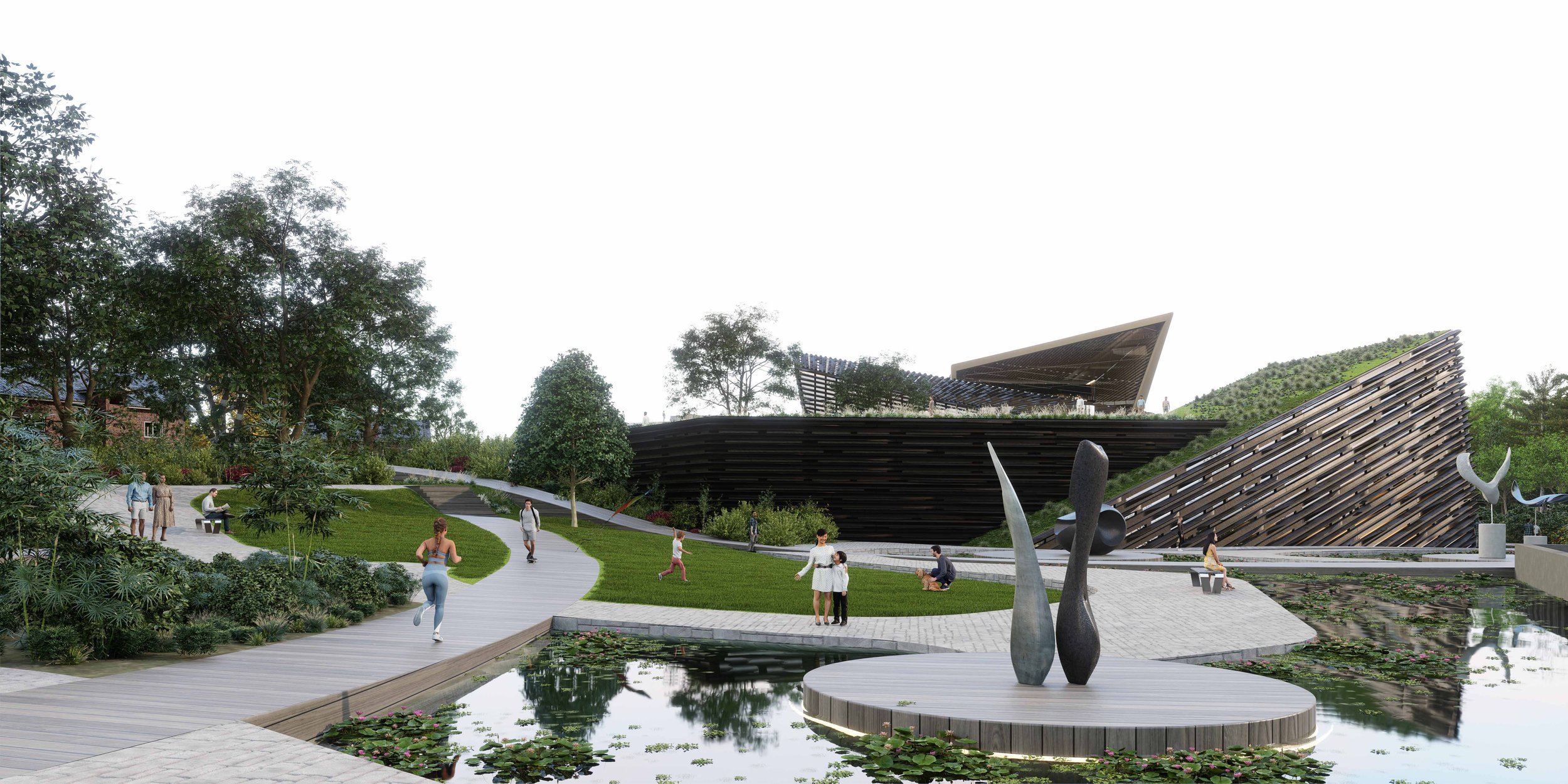
These looping circulation paths extend beyond the buildings into the park, forming a continuous and permeable landscape that links museums, historic houses, and public spaces. The composition ensures that no single façade dominates; instead, the site is experienced as an open, multi-directional environment where each path reveals new spatial relationships and perspectives.
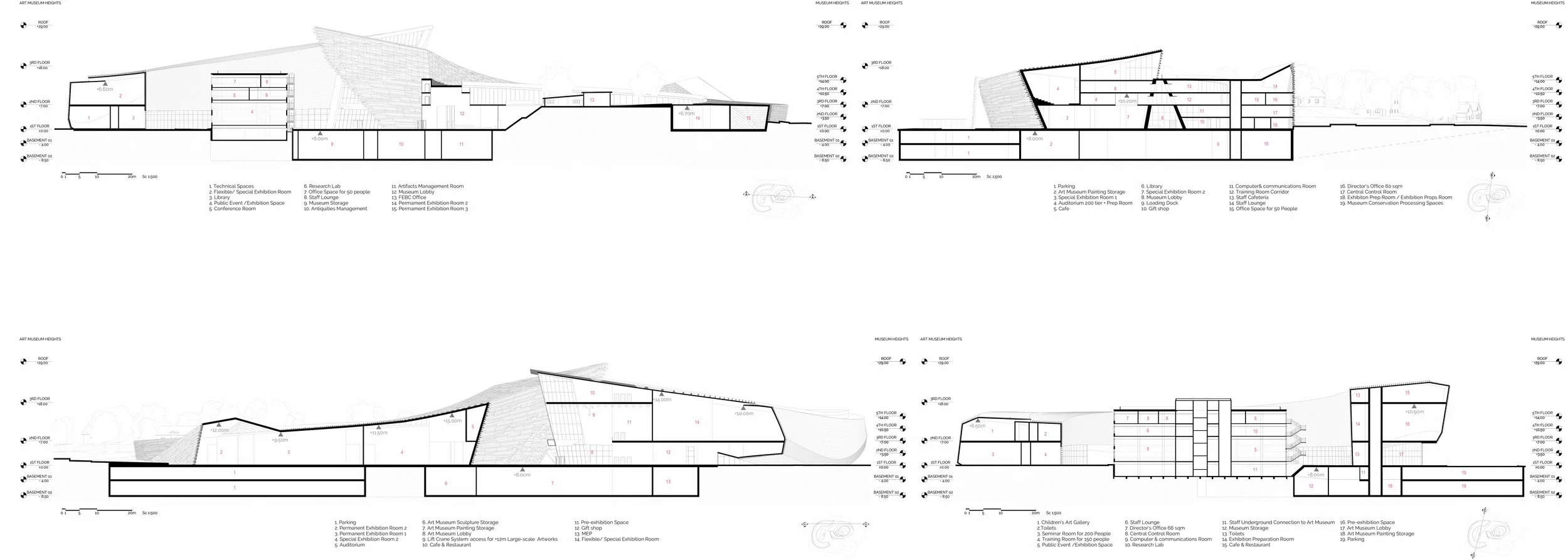
The design draws inspiration from Incheon’s unique geographical and cultural context—its coastal identity, tidal landscapes, and diverse urban fabric. This is reflected in the integration of topography, green roofs, and open spaces that respond to both ground-level experience and views from surrounding high-rise developments. The new museum volumes cluster around and protect the historic core, while remaining visually and physically connected to the wider city.
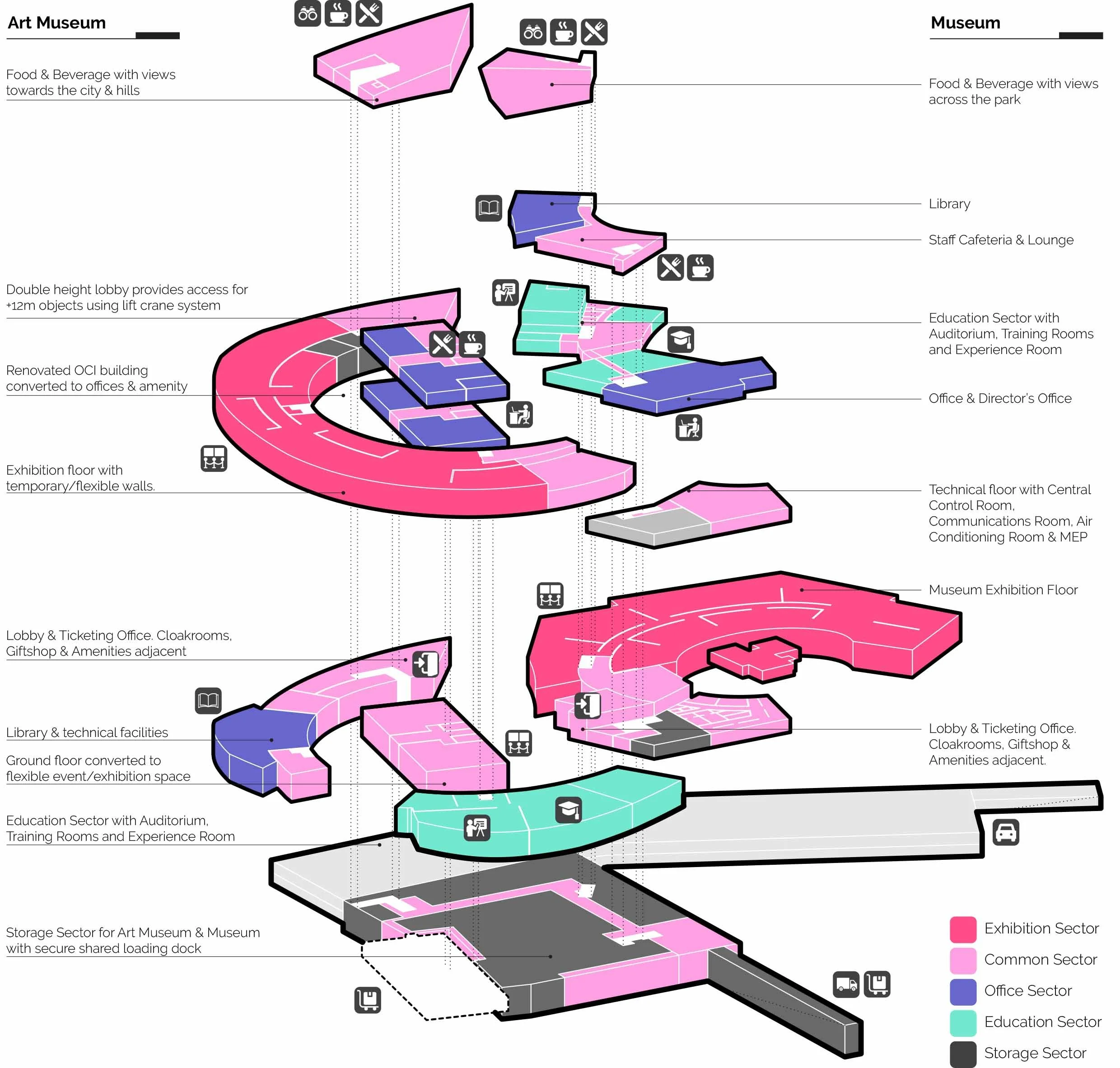
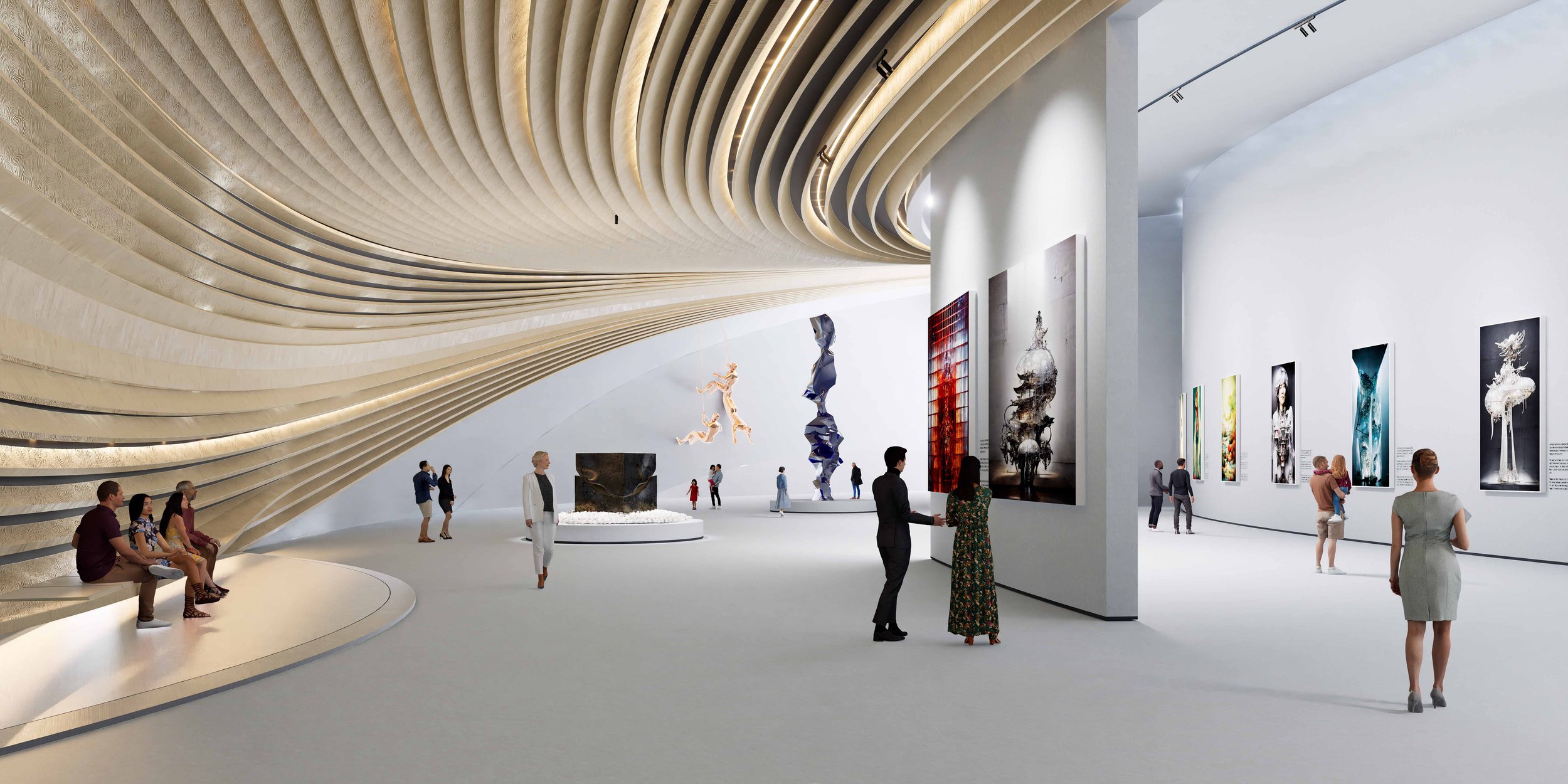
Internally, the two museums offer distinct yet complementary spatial strategies. The History Museum is organised around a chronological sequence that allows for both linear progression and flexible interpretation, while the Art Museum provides large, adaptable exhibition spaces that support a wide range of curatorial approaches, from large-scale installations to intimate displays.
Tidescape establishes a new model for cultural infrastructure—one that is open, adaptable, and deeply rooted in its context. By weaving together architecture, landscape, and heritage, the project creates a resilient and evolving cultural district that supports both local identity and international exchange.
-
Location: Incheon, South Korea
Project Size: 40,686 m² / 437,940 ft²
Client: Incheon Metropolitan City
Themes: Master Plan | Adaptive Reuse | Art Museum | Interior Gallery Design
Collaborators: AND, Supergraphiq