DW Warehouse
Transforming an Industrial Warehouse into a Contemporary Office
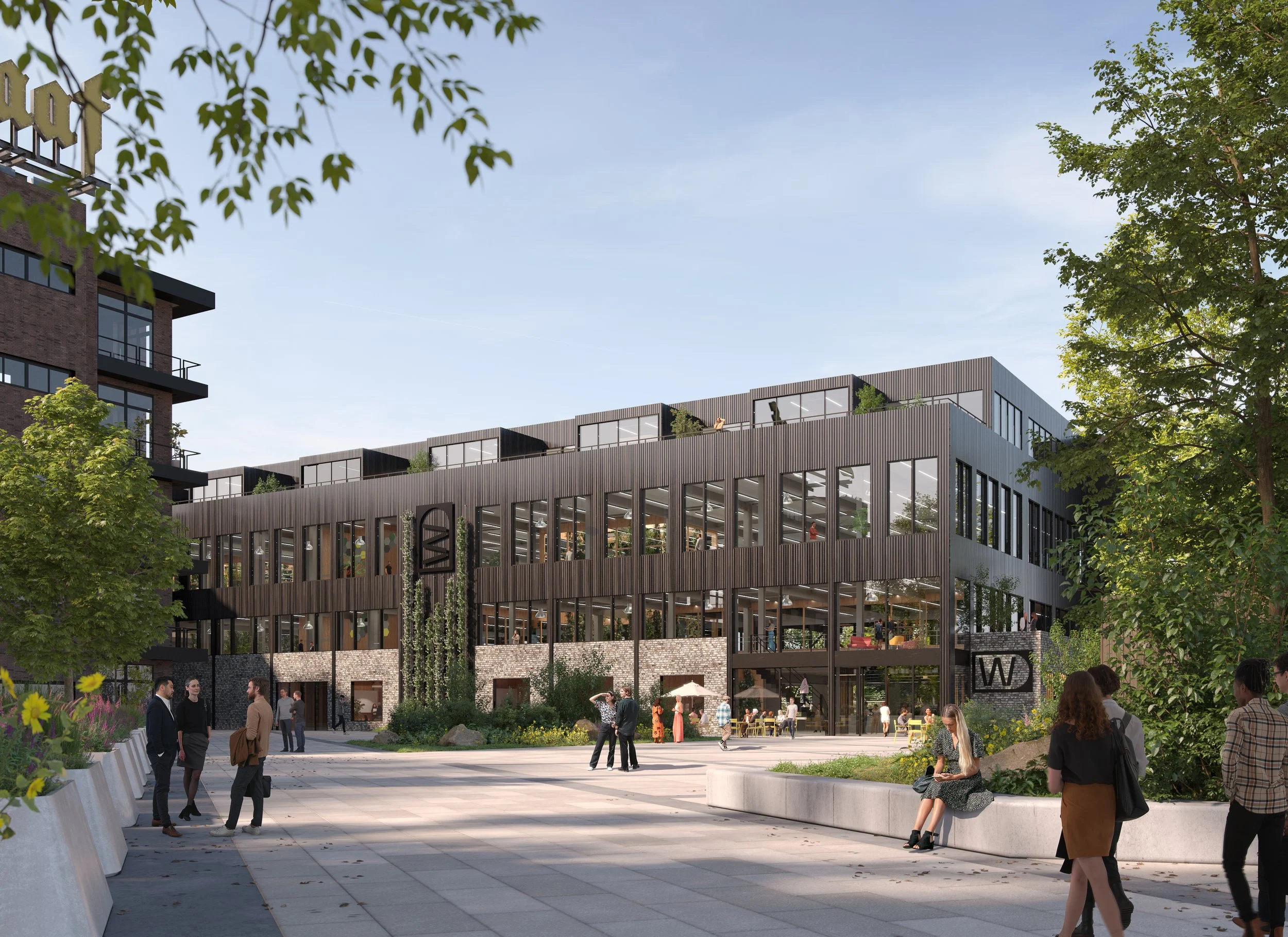
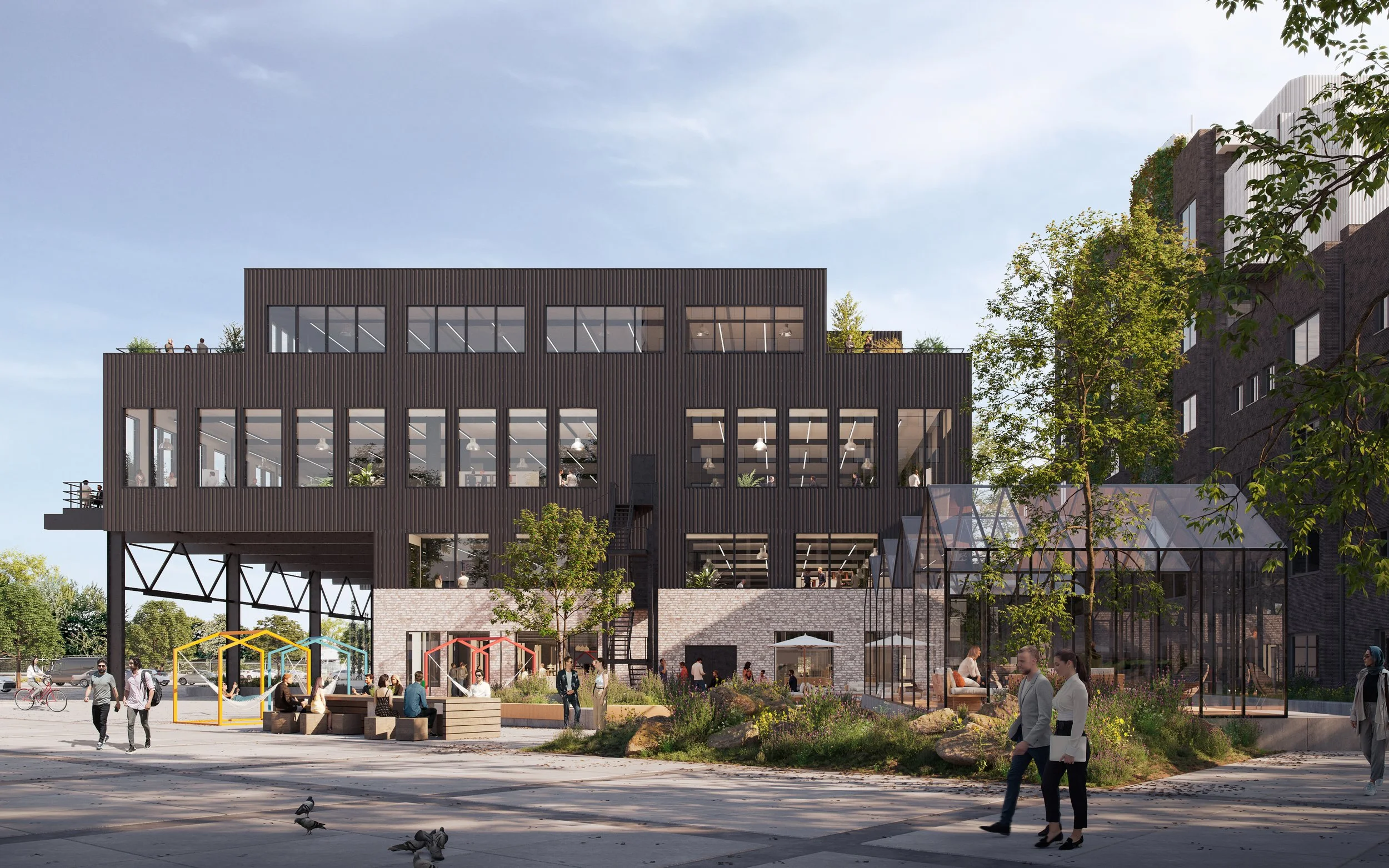
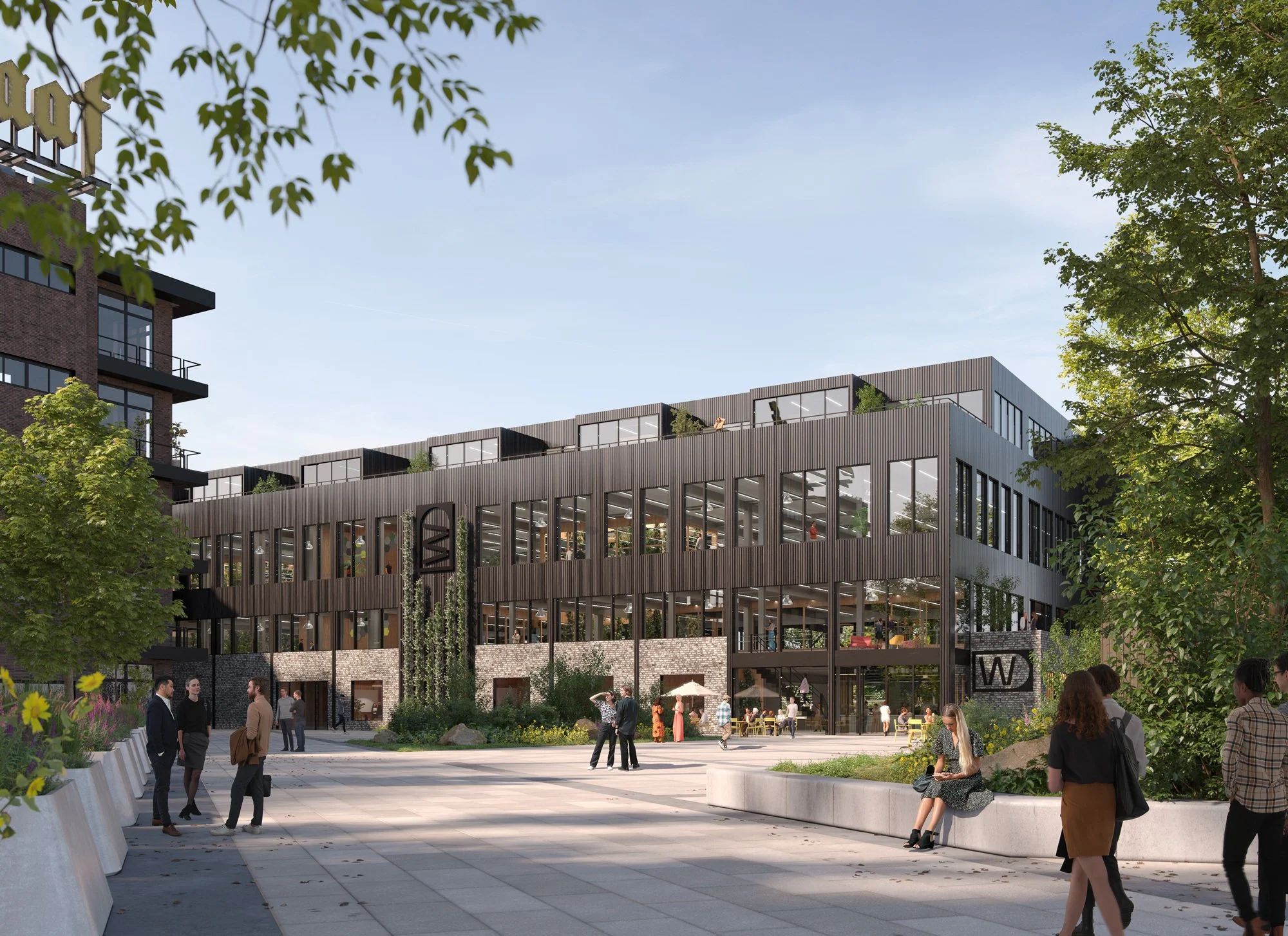
DW Warehouse is an adaptive reuse project in Amsterdam, transforming a former Telegraaf newspaper printing warehouse into a contemporary office environment. Located within the evolving District West area, the project reimagines a robust industrial structure as a flexible workplace while preserving its distinctive façade and structural identity.
By building on the spatial and material qualities of the existing warehouse, the design introduces daylight, greenery, and a layered mix of shared amenities to create a healthier, biophilic interior environment. This transformation not only enhances user experience and environmental performance, but also demonstrates how industrial heritage can be sustainably repurposed into a future-oriented workplace that remains rooted in its historical context.
-
DW Warehouse – From Industrial Printing Facility to Contemporary Workplace
DW Warehouse is an adaptive reuse project in Amsterdam that transforms the former Telegraaf newspaper printing facility into a contemporary office environment. Located within the evolving District West masterplan in Westpoort, the project repositions a robust industrial structure as a flexible and future-oriented workplace while preserving its historical identity.
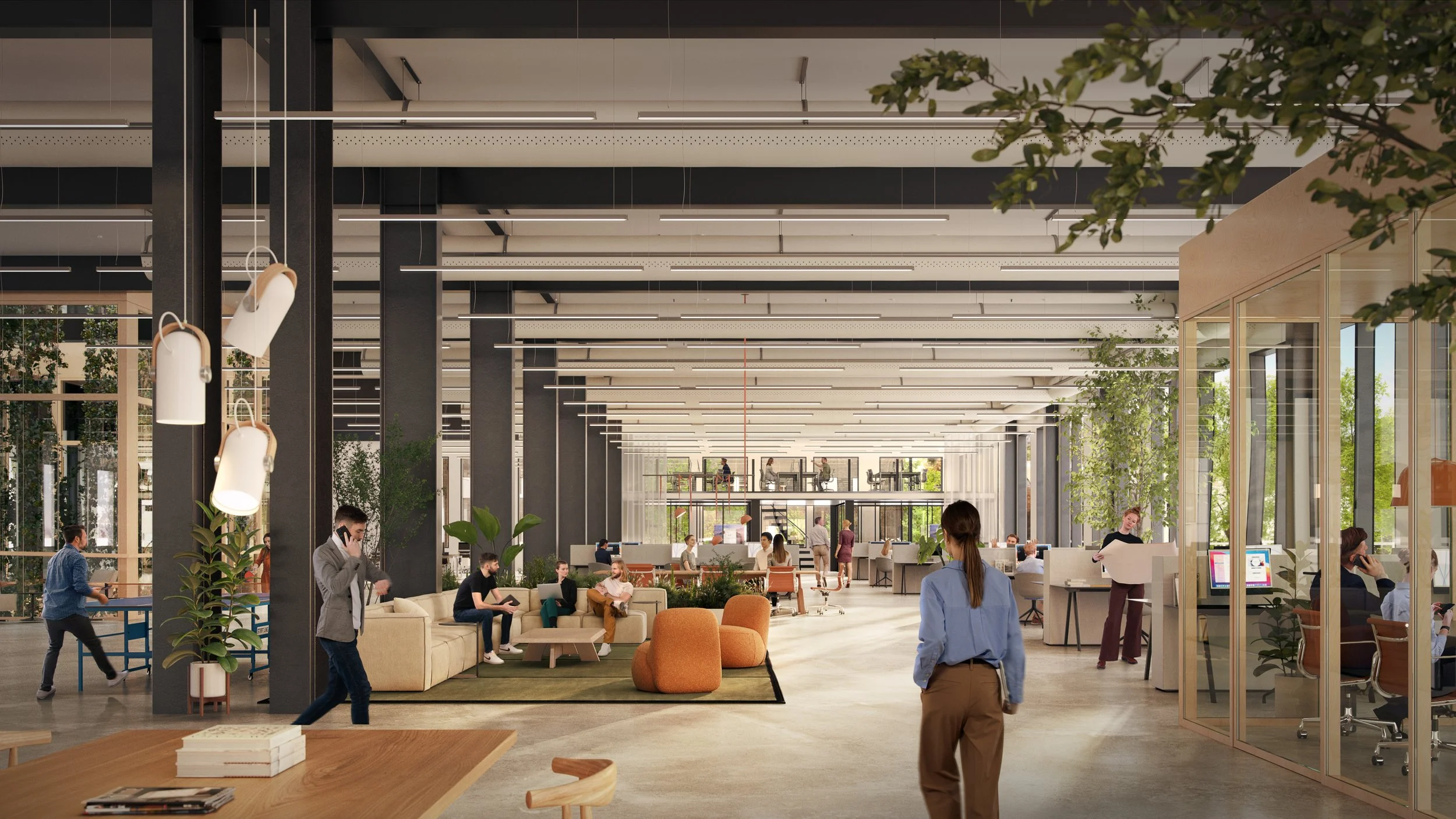
The design builds on the inherent qualities of the existing warehouse—its generous structural grid, large spans, and distinctive façade—retaining and upgrading these elements to reduce embodied carbon and maintain continuity with the site’s industrial heritage. Rather than demolishing the structure, the project embraces a strategy of transformation, using targeted interventions to adapt the building to contemporary standards of comfort, performance, and usability.
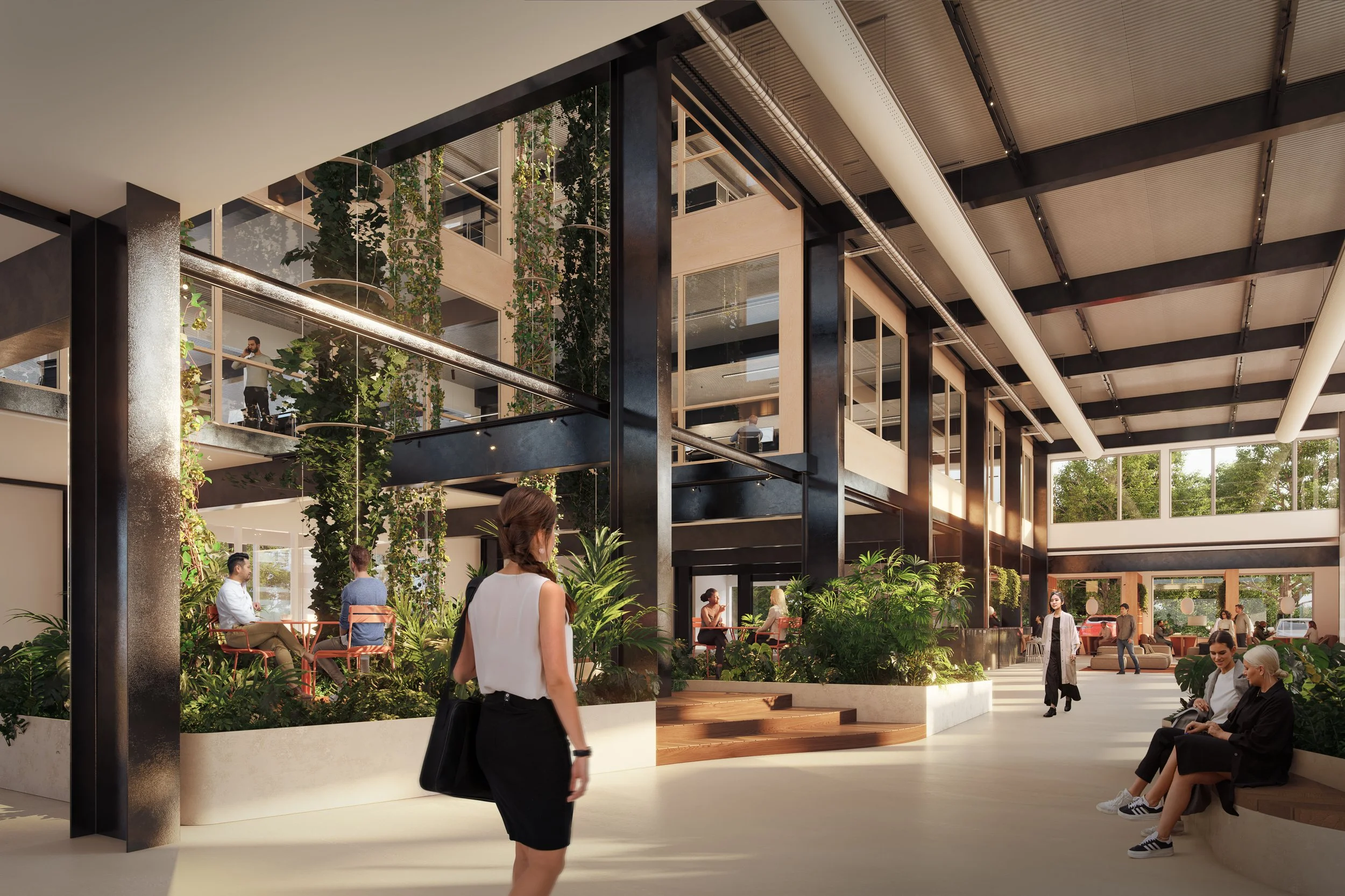
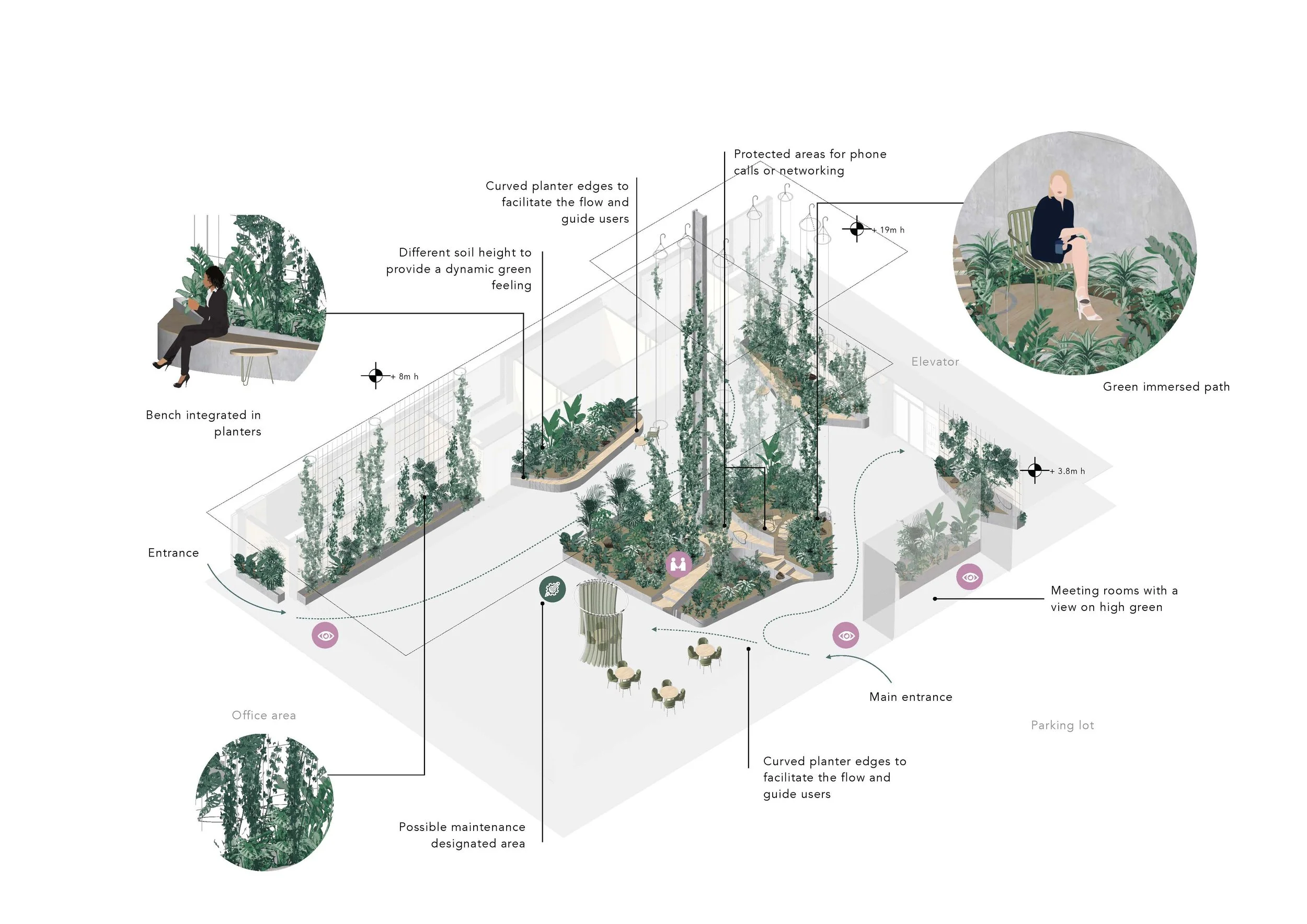
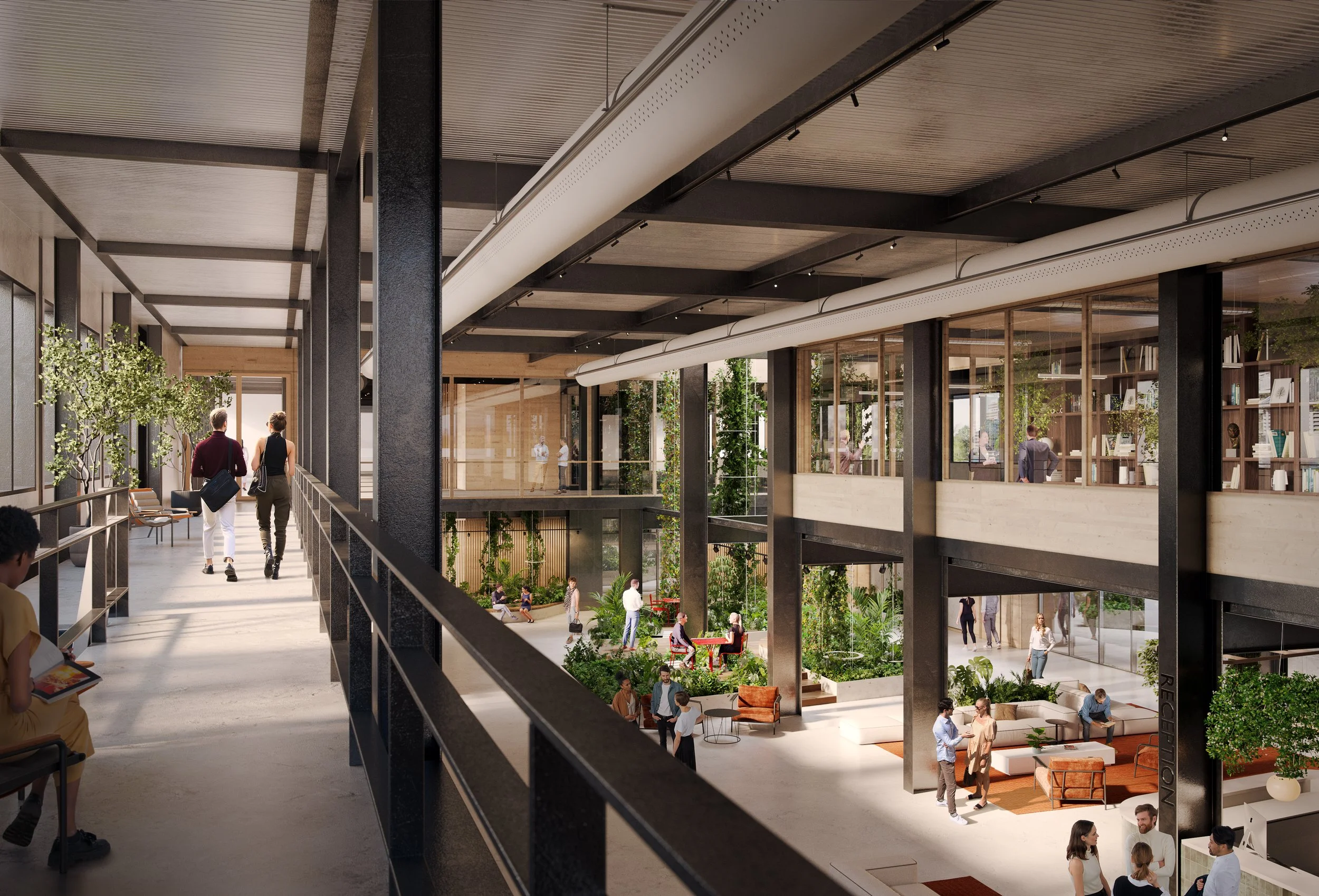
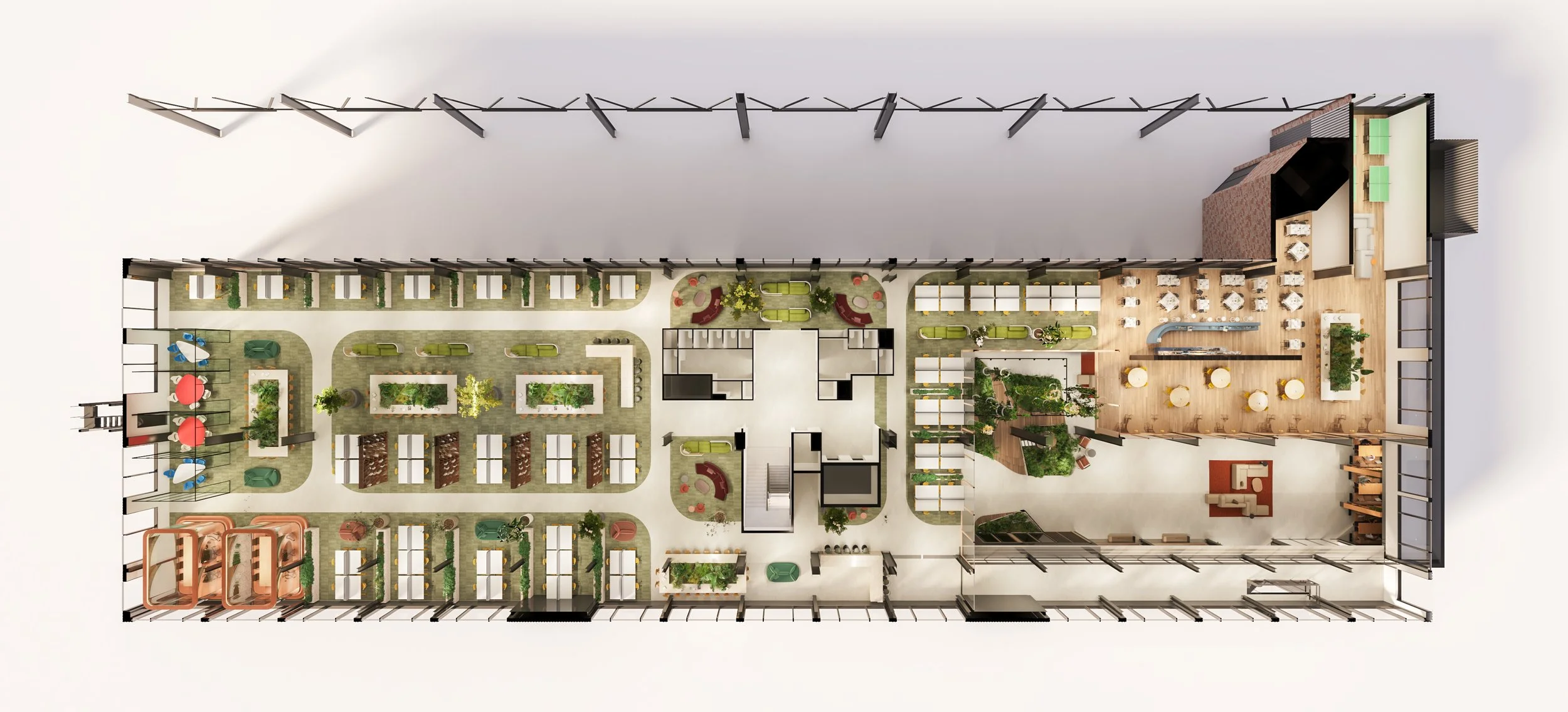
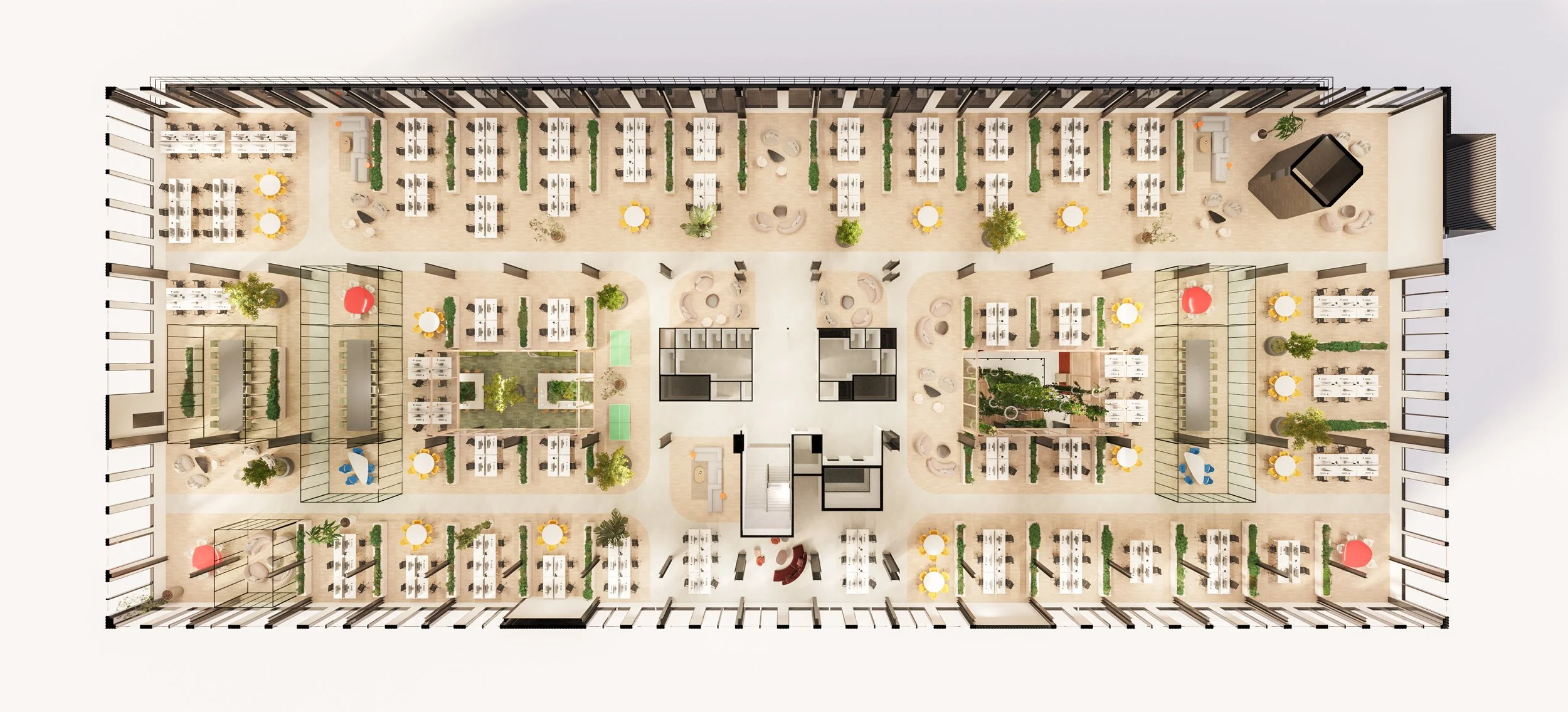
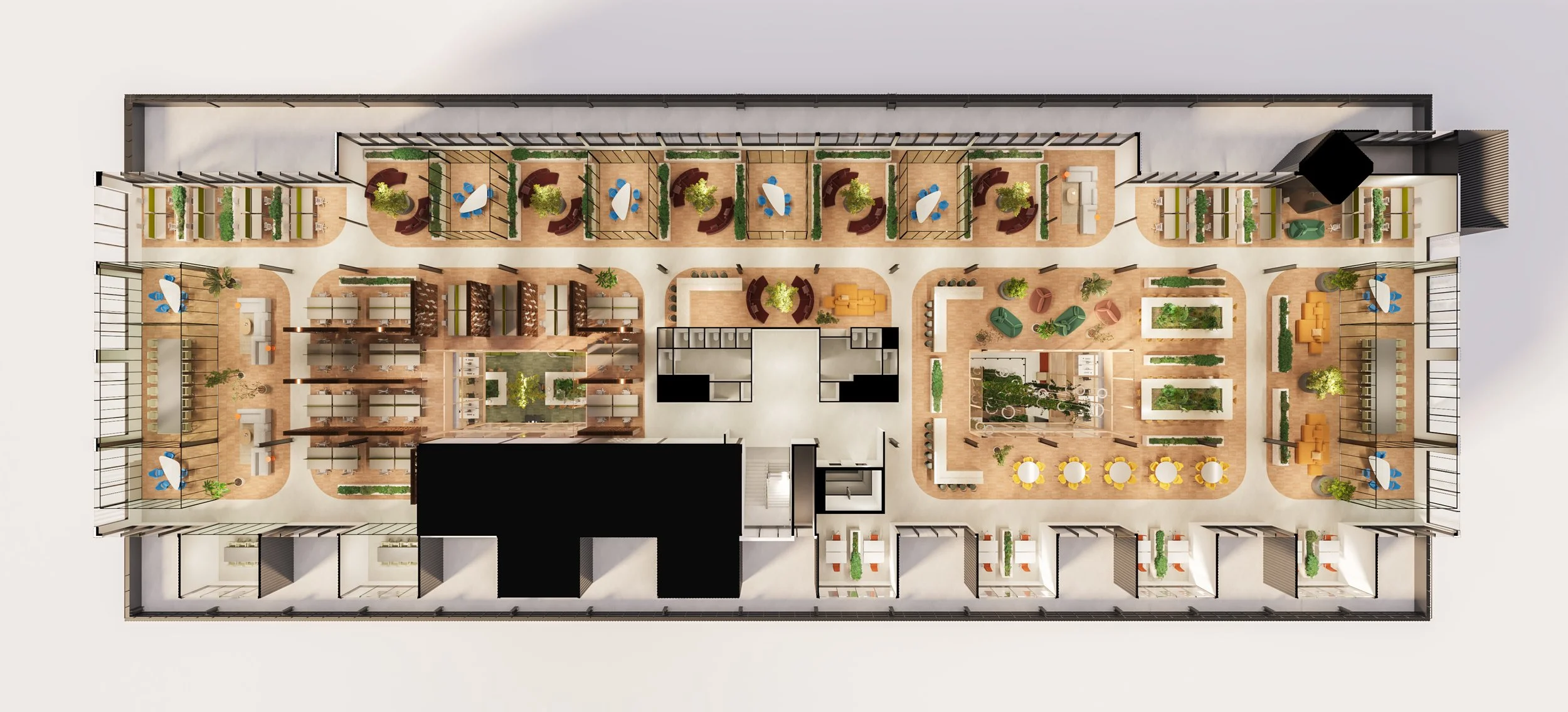
A key architectural move is the introduction of large vertical voids that cut through the deep floor plates. These interventions bring natural daylight into the core of the building, improve ventilation, and establish visual connections across levels. Conceived as biophilic interior spaces, the voids integrate planting and informal gathering areas, creating a healthier and more engaging work environment while softening the industrial character of the structure.
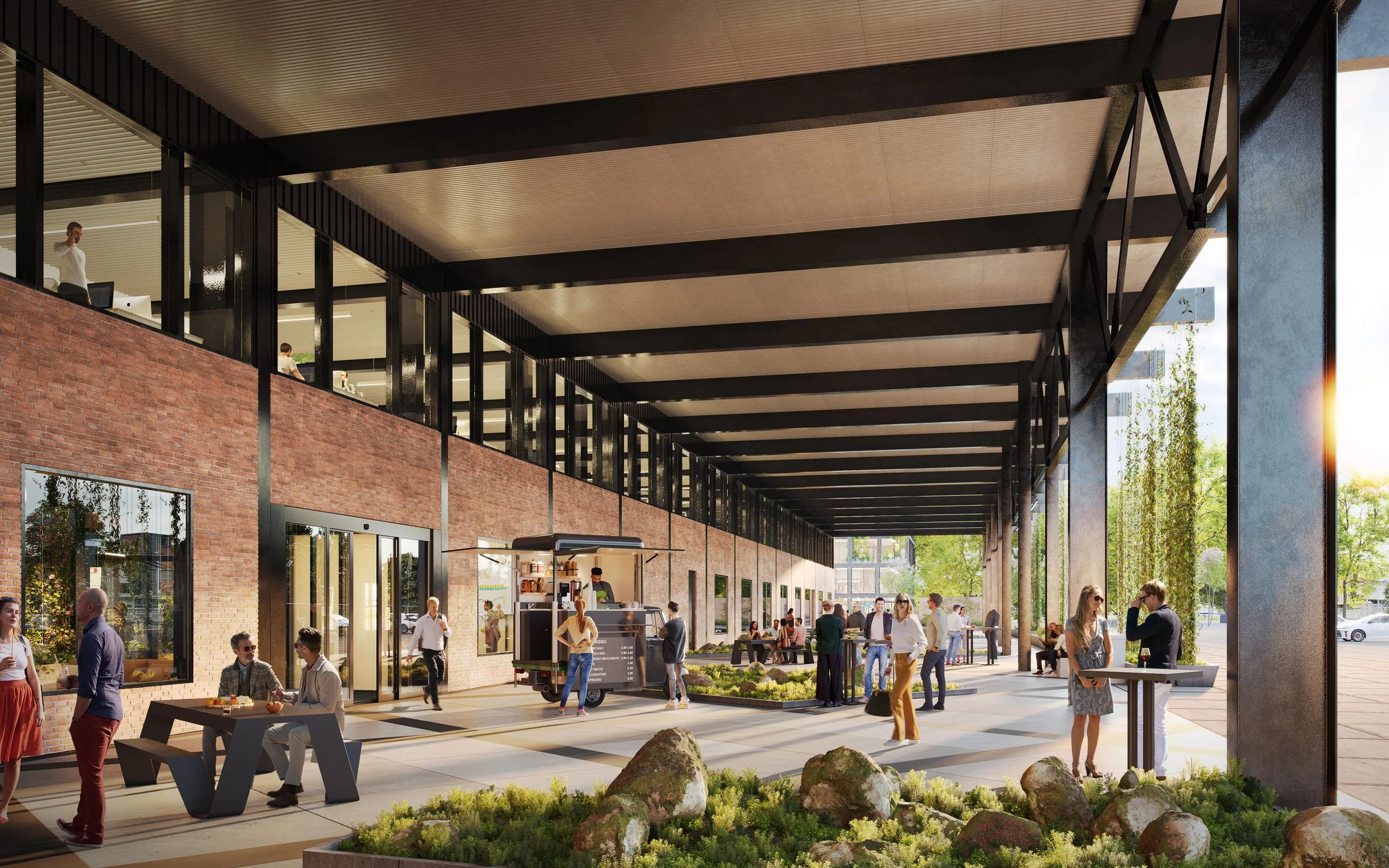
The façade is carefully restored and selectively modified, with enlarged openings that enhance transparency and daylight penetration. This approach maintains the building’s original expression while improving environmental performance and strengthening its relationship to the surrounding urban context.
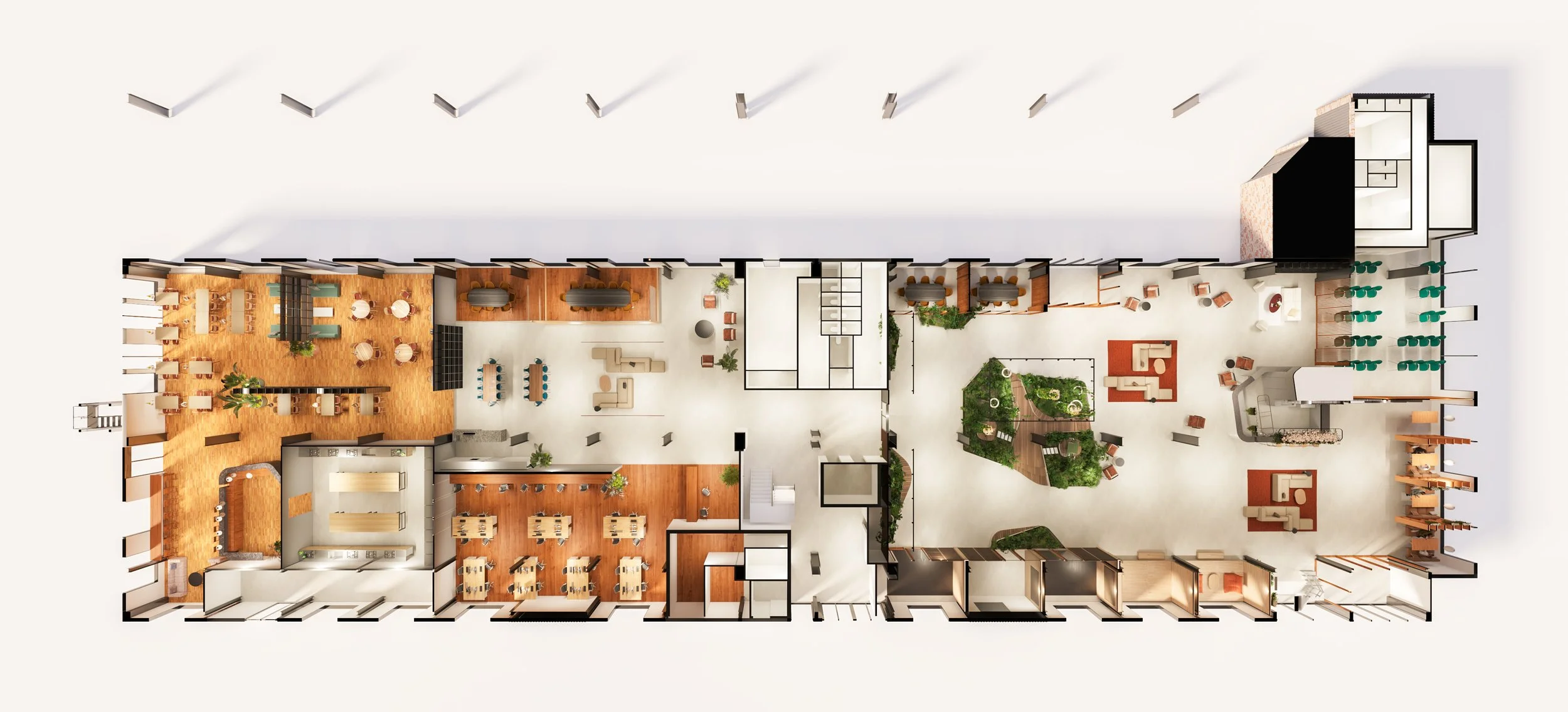
At ground level, a series of shared amenities—including a café, meeting spaces, and wellness facilities—activate the building internally and support a range of working patterns. These social spaces position the warehouse as more than a workplace, fostering interaction and contributing to the emerging mixed-use character of the District West area.
DW Warehouse demonstrates how industrial heritage can be reimagined through adaptive reuse—extending the life of an existing structure while creating a light-filled, flexible, and socially connected workplace for the future.
At the core of the design is the preservation and reinterpretation of the warehouse’s industrial character. Originally designed to house large-scale printing machinery, the building prioritized production over human experience—resulting in deep floor plates with limited access to light and air. The transformation addresses this imbalance by introducing a series of strategic interventions that bring daylight, openness, and comfort into the forefront. The existing façade is retained, restored, and selectively modified with enlarged openings to enhance transparency and daylight penetration, maintaining the building’s historic identity while upgrading its environmental performance. This careful calibration between preservation and adaptation allows the building to continue narrating its industrial history, even as its function evolves.
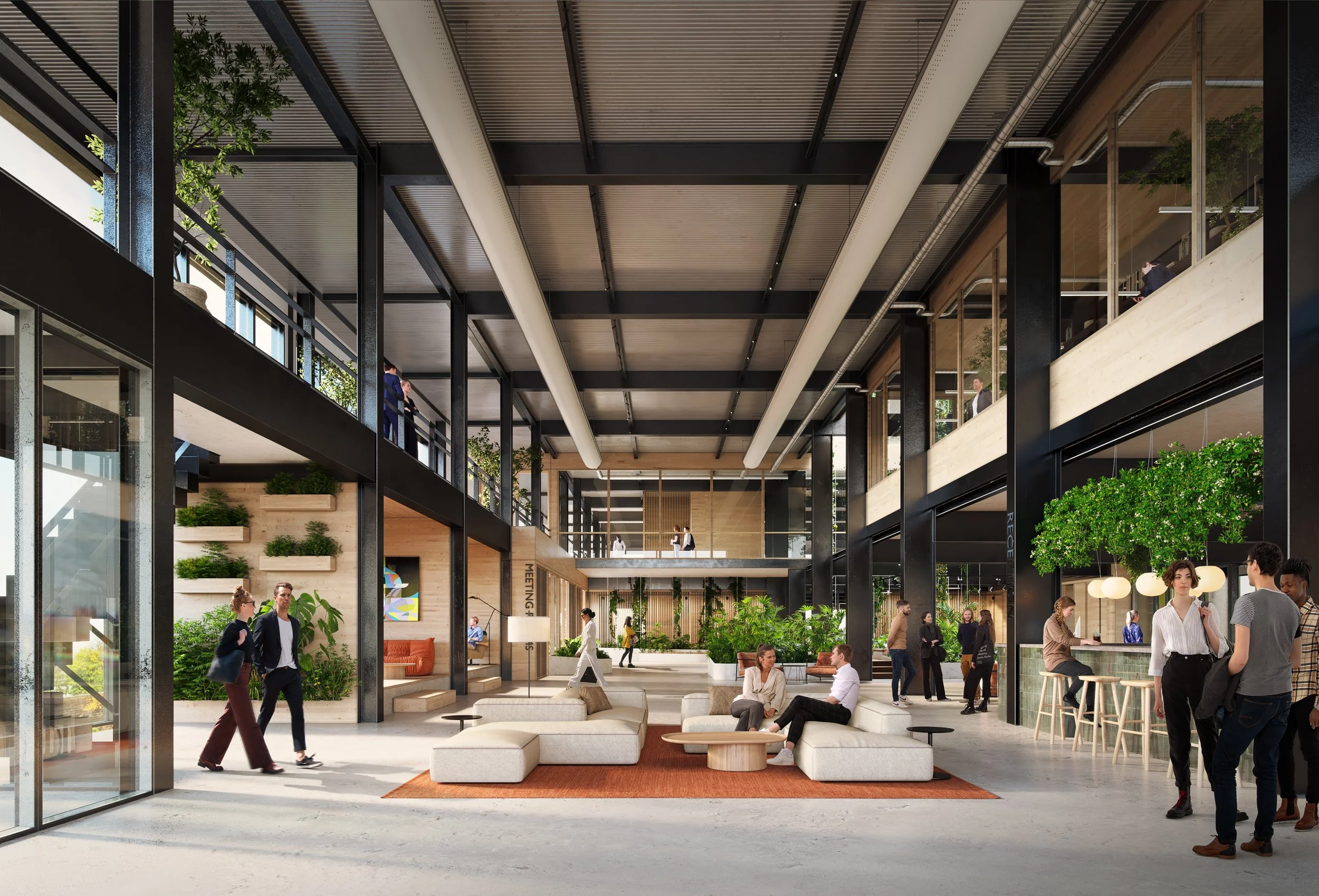
Internally, the insertion of two large voids fundamentally reshapes the spatial experience of the warehouse. These vertical cuts draw natural light deep into the plan, improve air circulation, and create visual connections across floors—transforming what was once an introverted, mono-functional volume into a dynamic and breathable workplace. These voids are conceived as biophilic cores, integrating planting, natural materials, and informal gathering spaces that soften the industrial character and enhance occupant well-being. The interplay between raw structural elements and organic interventions establishes a balanced and human-centered environment.
The program is further enriched through the introduction of hybrid amenity spaces that extend beyond traditional office functions. A central entrance zone operates as a multi-functional hub—combining café, meeting, and wellness facilities—to support a range of working patterns and social interactions. These shared spaces foster collaboration and community, both within the building and in relation to the surrounding neighbourhood, positioning the Warehouse as an active contributor to the emerging urban fabric of Westpoort.
Sustainability underpins the entire approach. By retaining the existing structure and façade, the project significantly reduces embodied carbon and construction waste, demonstrating the environmental and economic value of reuse over replacement. At the same time, upgrades to the building envelope, daylighting strategy, and internal systems align the Warehouse with contemporary performance standards.
Through this layered transformation, the former printing warehouse is redefined as a flexible, light-filled, and socially engaged workplace—one that preserves the memory of its industrial origins while actively participating in the future evolution of Amsterdam’s harbour district.
-
Location: Sloterdijk, Amsterdam, The Netherlands
Project Size: 11,481m² / 123,580 ft²
Clients: APF International | TPG Angelo Gordon
Themes: Warehouse Conversion | Adaptive Reuse | Office
Collaborators: NIVAB Vastgoed Advies BV, MOSS, DGMr, Renders by Parallel
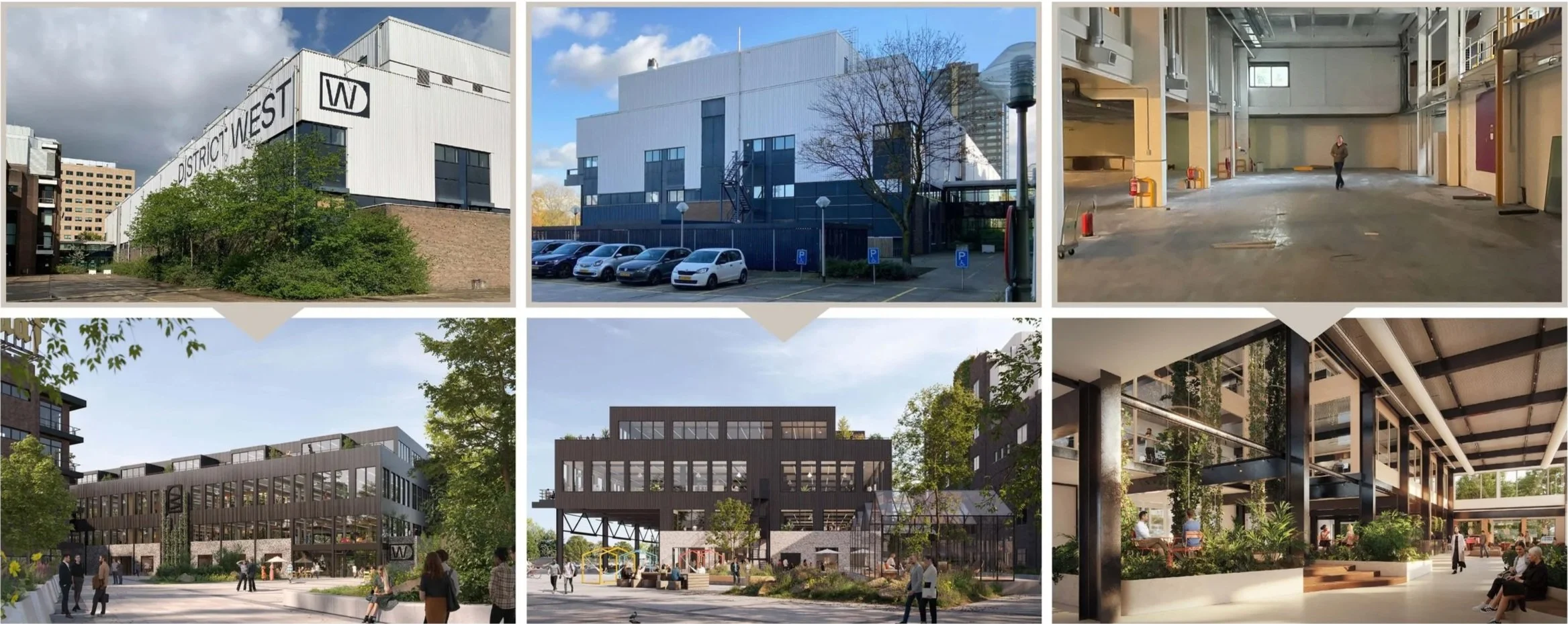
Where ink once met paper, a new urban future takes shape.