766 W College Street
Designing housing within a hillside city
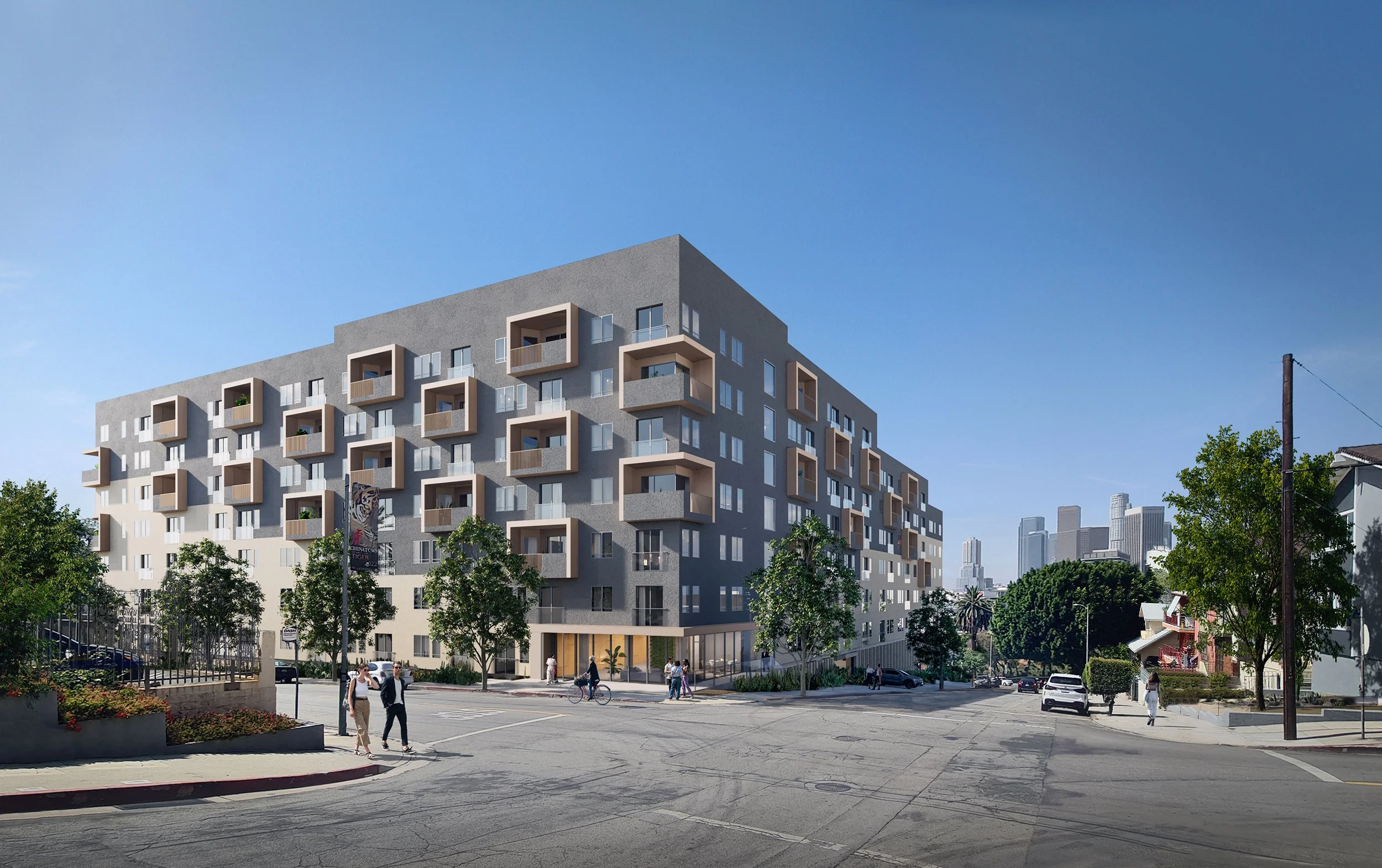
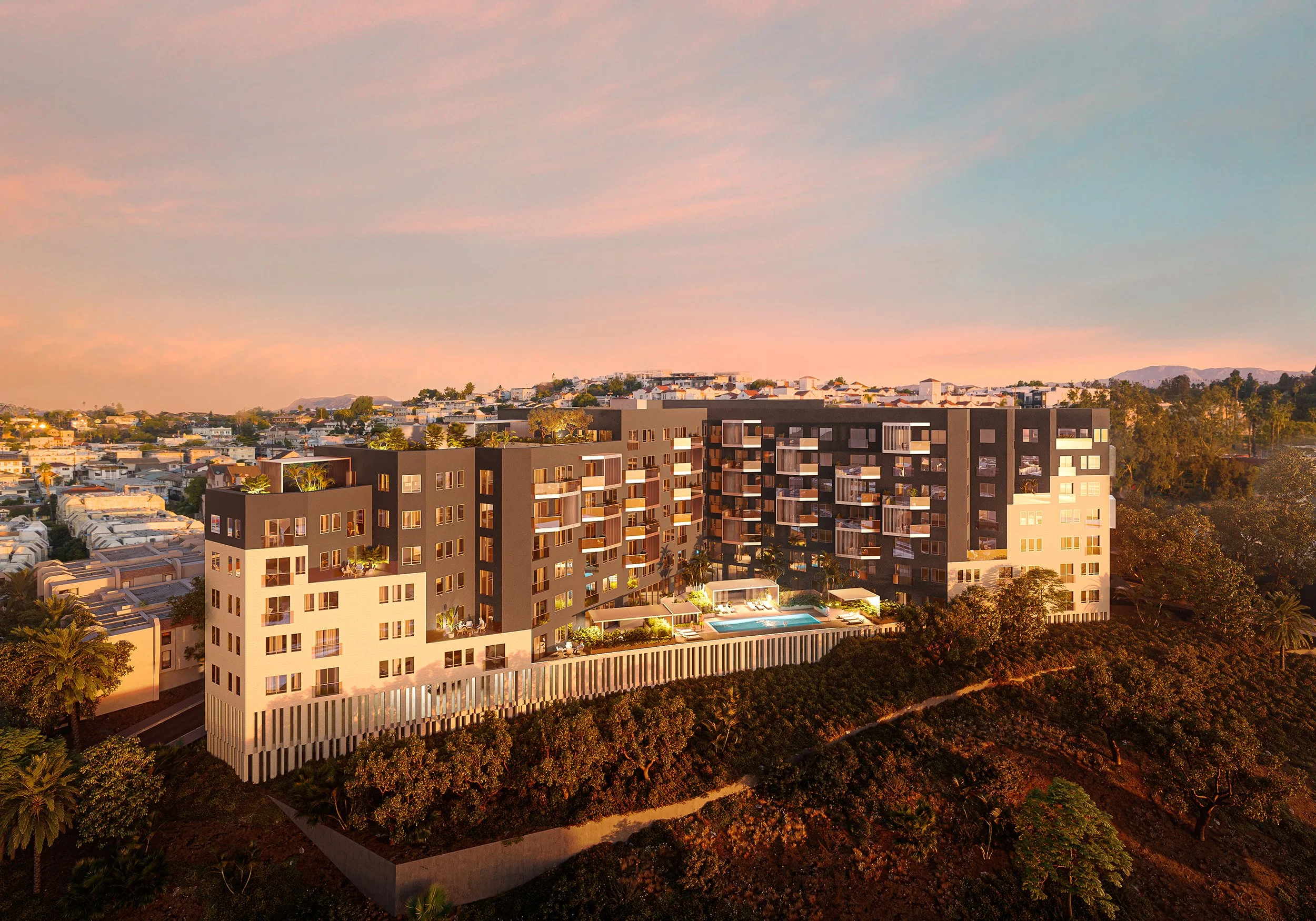
766 W College Street is a multifamily housing project in Los Angeles, designed as a terraced residential building that responds to the unique hillside context of Chinatown. Shaped by the area’s rising and falling terrain, the project is conceived as a complementary addition to the city’s layered skyline—framing views toward downtown Los Angeles, surrounding open spaces, and the distant San Gabriel Mountains.
Through a close integration of architecture and topography, the design creates a context-sensitive and attainable housing solution that balances environmental performance, community living, and construction efficiency, contributing to the evolving urban fabric of Los Angeles.
-
Located within the hillside fabric of Chinatown in Los Angeles, the 766 W College Street multifamily housing project emerges from a close reading of the site’s topographic and urban conditions. This area of Los Angeles is defined by rising and falling hills that reveal unexpected vistas—moments where the city opens outward to views of the downtown skyline, surrounding open spaces, and the distant silhouette of the San Gabriel Mountains. The project is conceived as a complementary addition to this layered urban landscape, embedding itself within both the physical terrain and the visual continuum of the city.
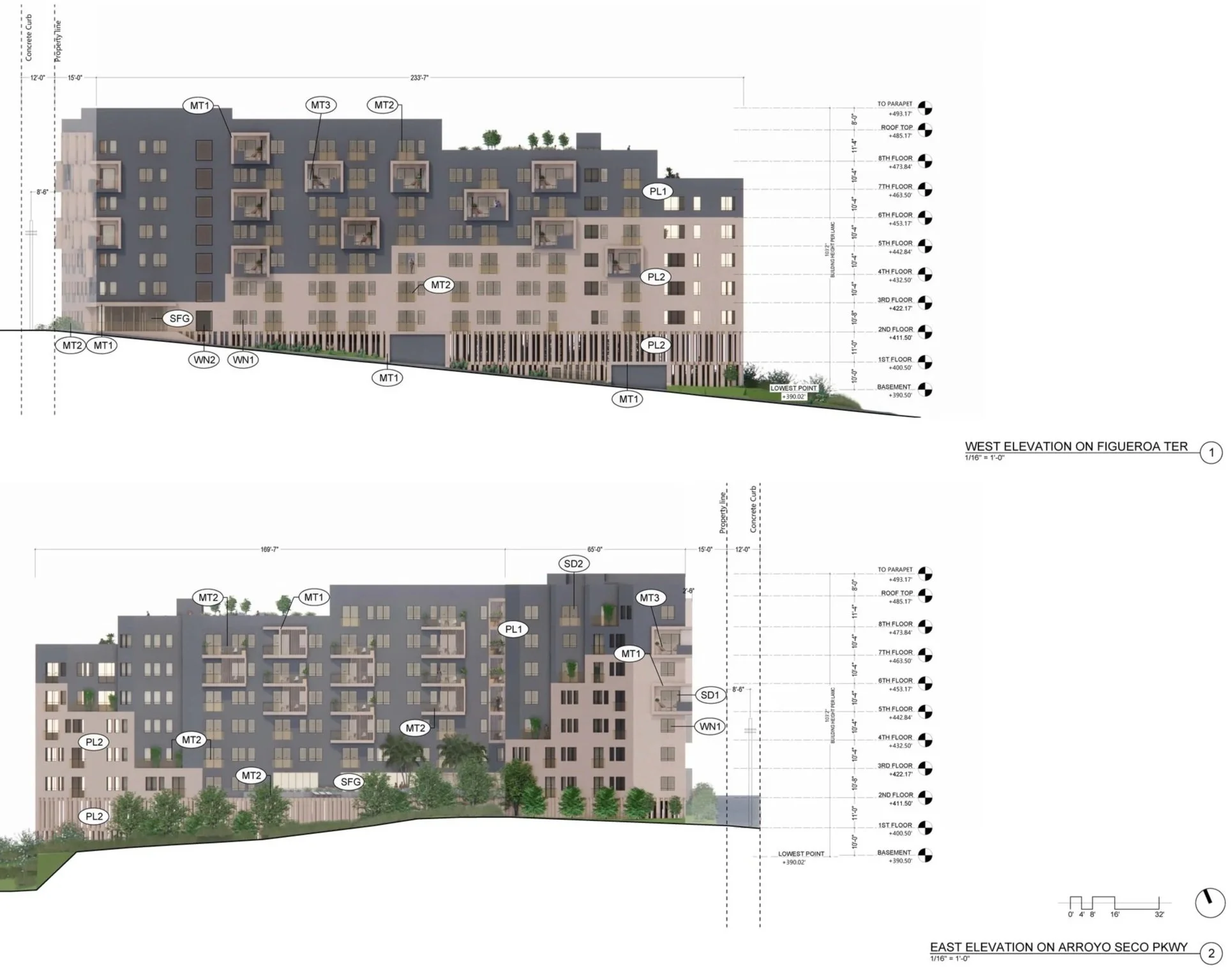
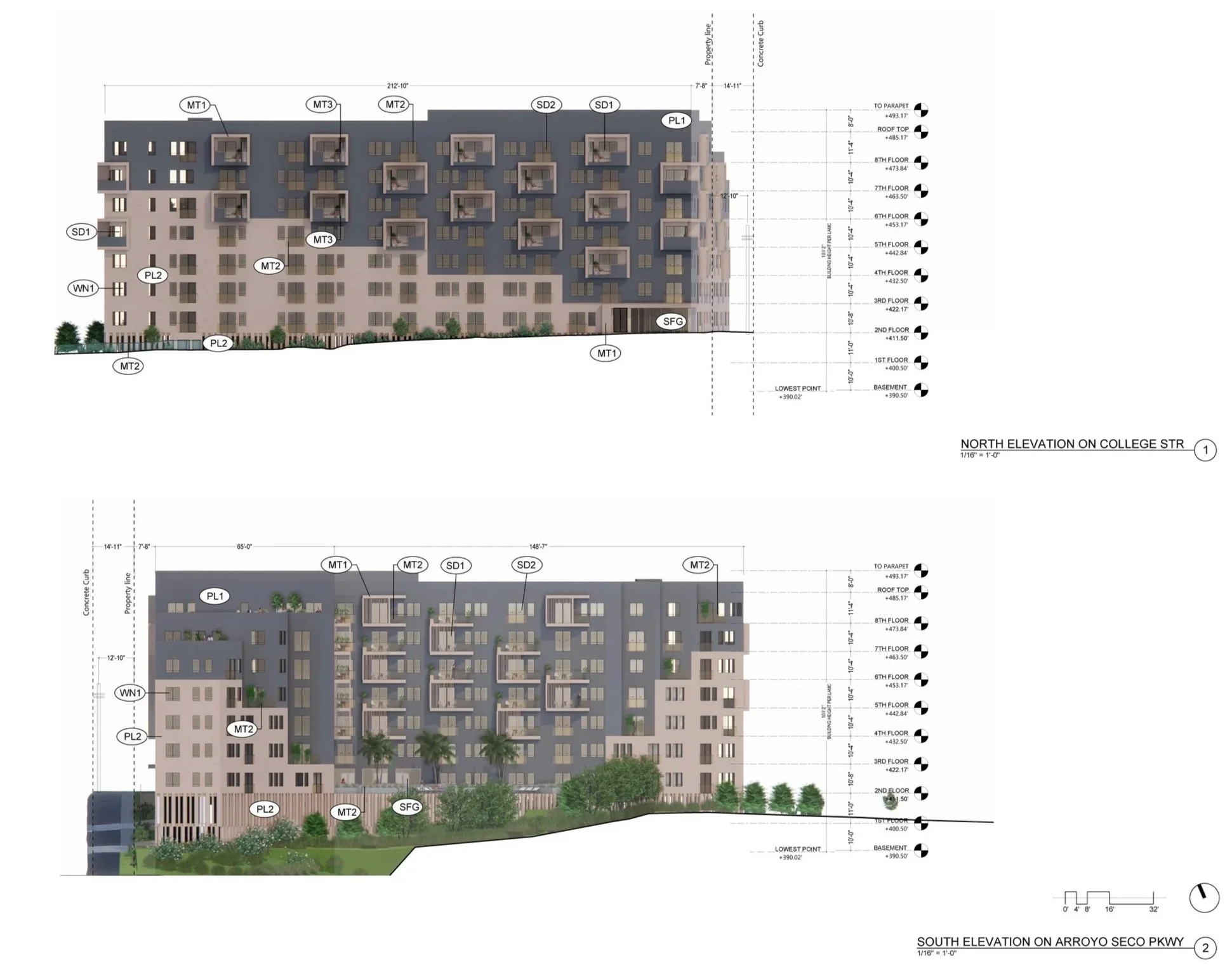
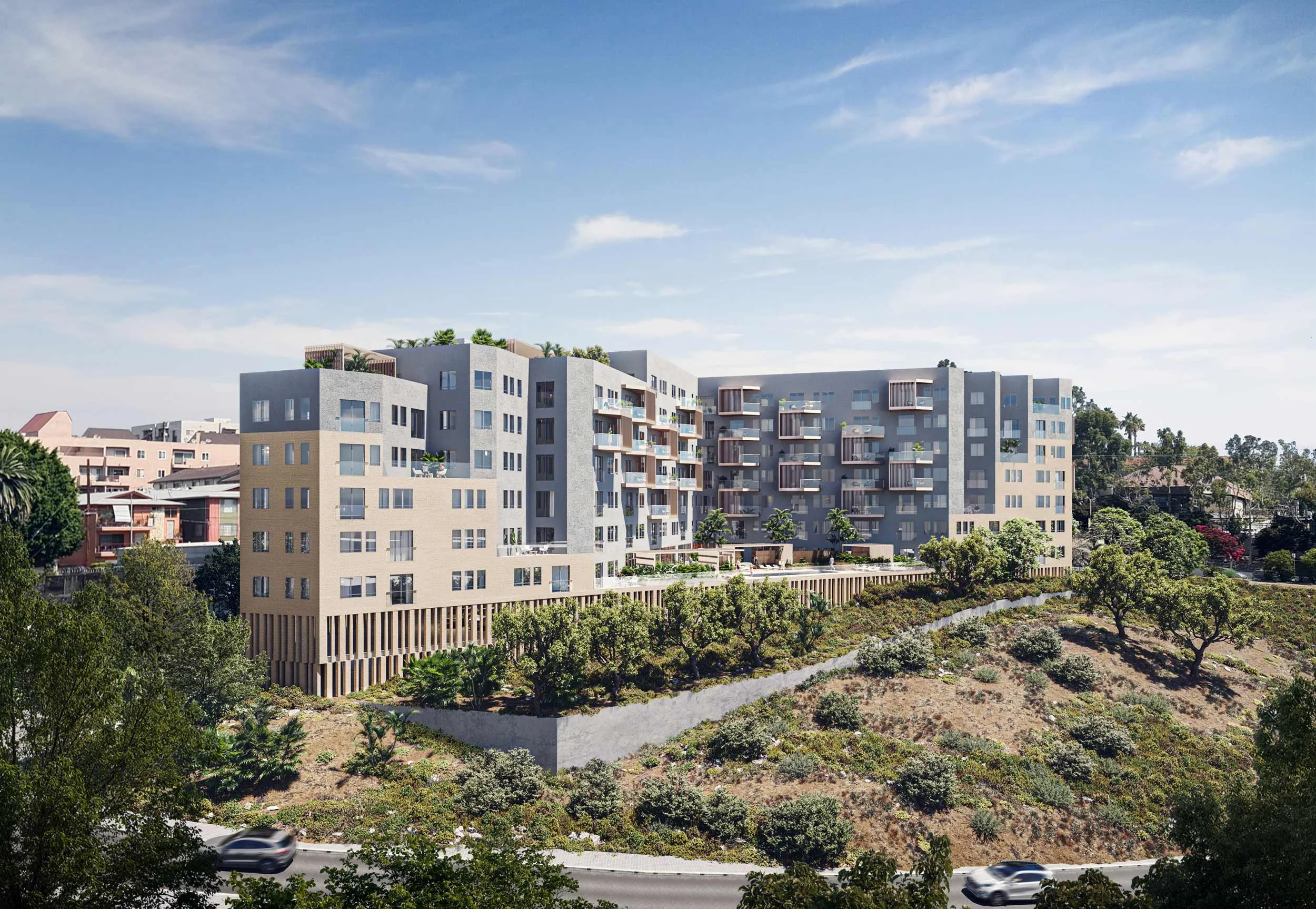
The building is organized as a terraced L-shaped bar extending along College Street and Figueroa Terrace. This configuration follows the natural slope of the site, allowing architecture and landscape to operate in tandem with the existing topography. By minimizing grading and avoiding large retaining walls, the design establishes a more sustainable and contextually responsive approach to hillside housing. The massing aligns with the slope of adjacent streets, reducing shadow impacts and preserving access to light and air for neighboring buildings and public spaces.
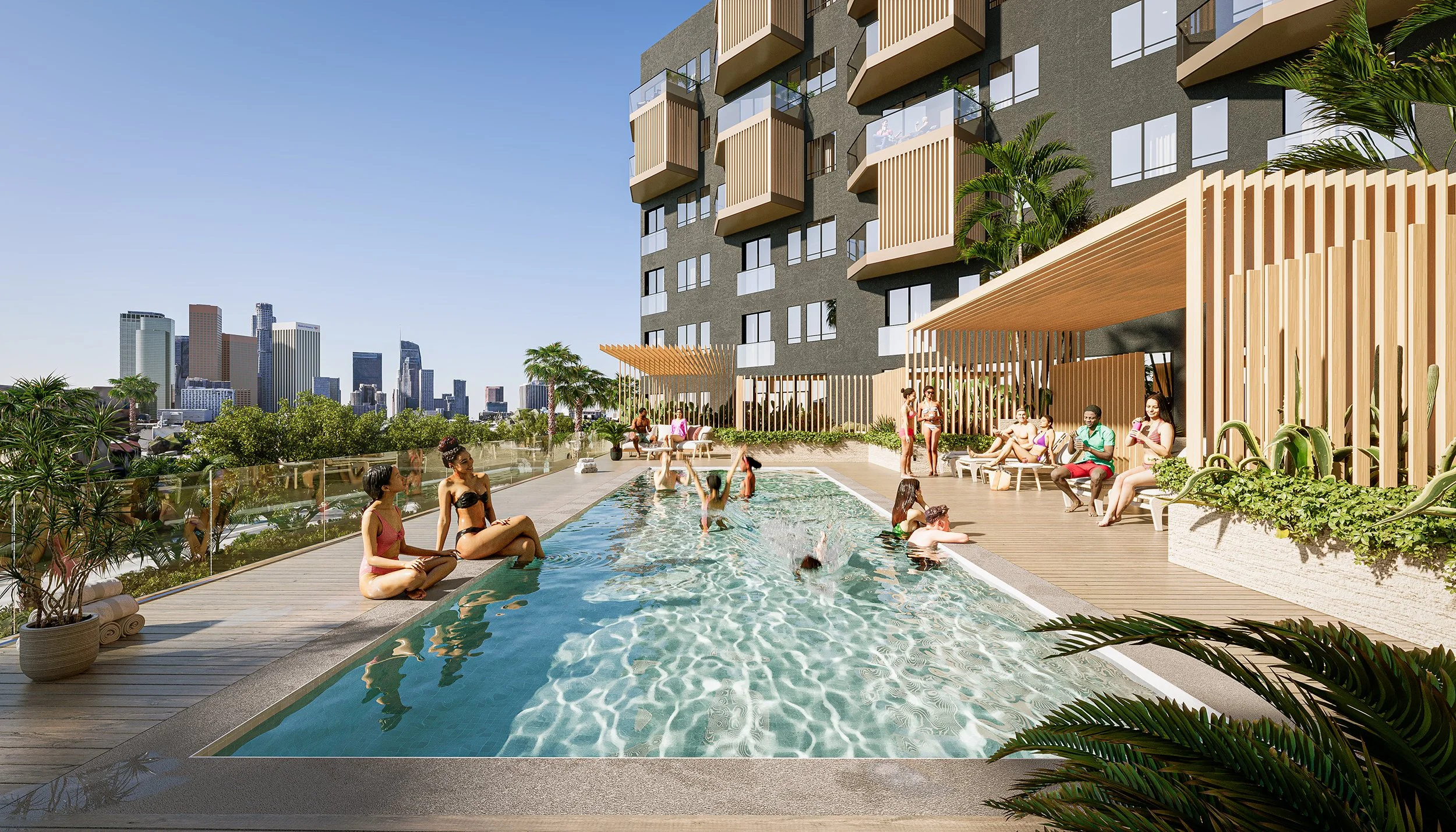
Due to the steep grade, the primary ground-level presence is concentrated at the intersection of College Street and Figueroa Terrace. Here, transparency and openness define the architectural expression, with clear glazing strengthening visual and social connections to the street. Along the hillside edge facing the highway, the building is set back to create a landscaped buffer that frames a generous outdoor amenity deck. The overall mass is carefully modulated through setbacks and terraces, reducing perceived scale and introducing variation from multiple vantage points, including the highway corridor.
This modulation is reinforced through a diagonal articulation of complementary material tones across the façade. Combined with a rhythm of framed balconies, the façade reduces the apparent mass of the building while reflecting the natural grading of the site. The podium is integrated seamlessly through consistent material treatment and landscape buffering, softening its interface with surrounding infrastructure.
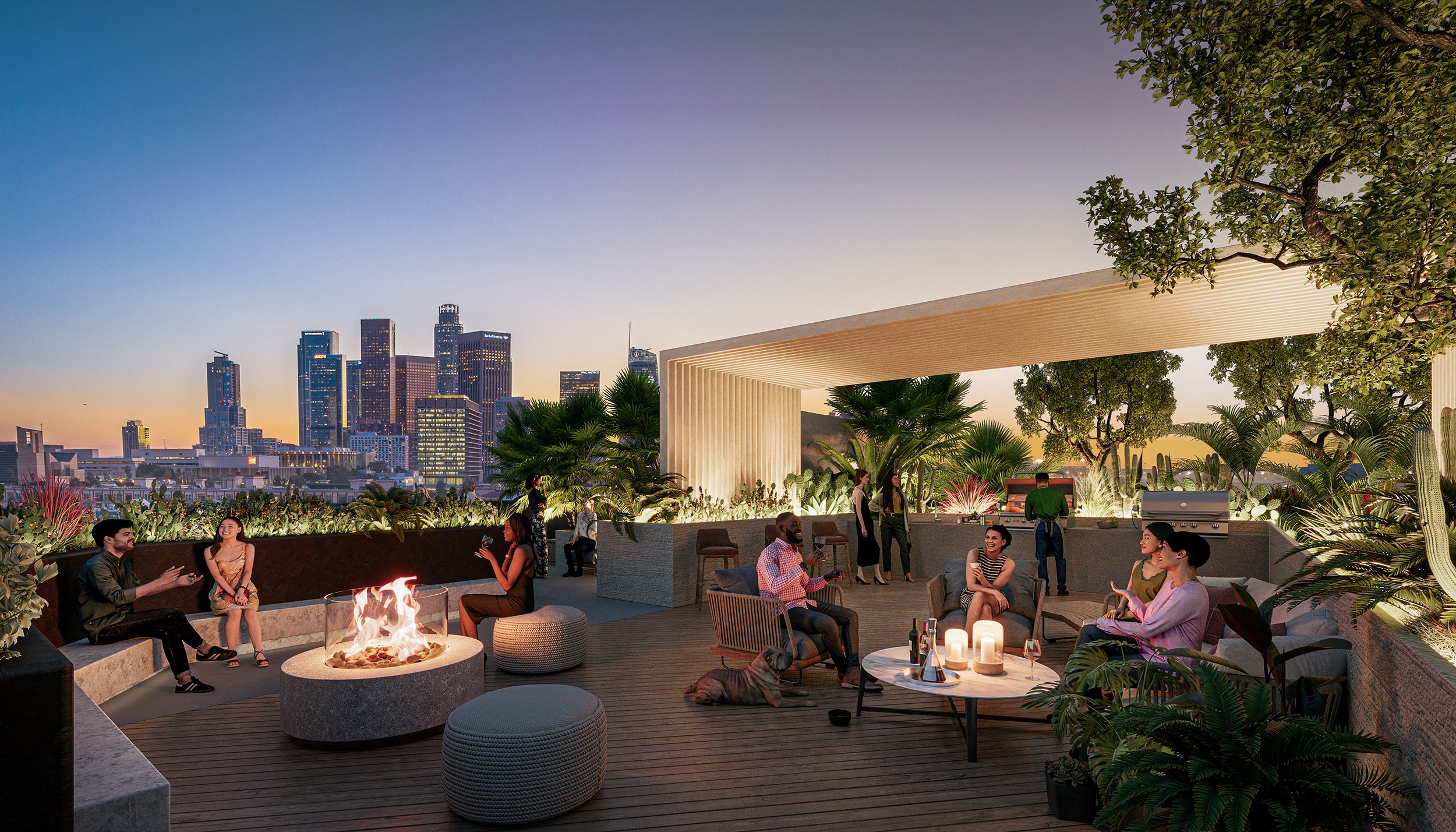
Communal life is embedded throughout the project. Ground-level amenity spaces support social gathering, fitness, and everyday activity, while two shared terraces—one at the main amenity deck and another at the sixth-floor roof—offer elevated outdoor environments with expansive views across Los Angeles. These spaces extend the residential experience beyond the unit, fostering a strong sense of community.
Environmental performance is integral to the design. Strategic tree planting and shade structures enhance passive cooling, while canopy trees along the south and southwest façades provide solar protection. Façade-integrated shading elements, including screened balconies and vertical slats, reduce heat gain and improve energy efficiency. The parking podium incorporates natural ventilation, allowing daylight and airflow while maintaining architectural cohesion.
Material strategies further support sustainability, with light-reflective surfaces reducing heat absorption and matte façade finishes minimizing glare onto neighboring properties. Through these combined approaches, the building maintains a respectful relationship with its context while improving long-term environmental performance.
Ultimately, the project demonstrates how attainable multifamily housing in Los Angeles can respond to complex hillside conditions through a careful alignment of form, performance, and construction efficiency—offering a context-driven model for sustainable urban living.
-
Location: Los Angeles, CA 90012
Project Size: 14,200 m² / 152,758 ft²
9-Story building ( 2 Parking stories subterranean, 7 residential stories above grade)
Client: Chavez Ravine Company
Themes: Residential | Affordable Housing |Mid-rise
Collaborators: KFA, KPFF, Artifact, Langan, Supergraphique, Play-time